Start with a path
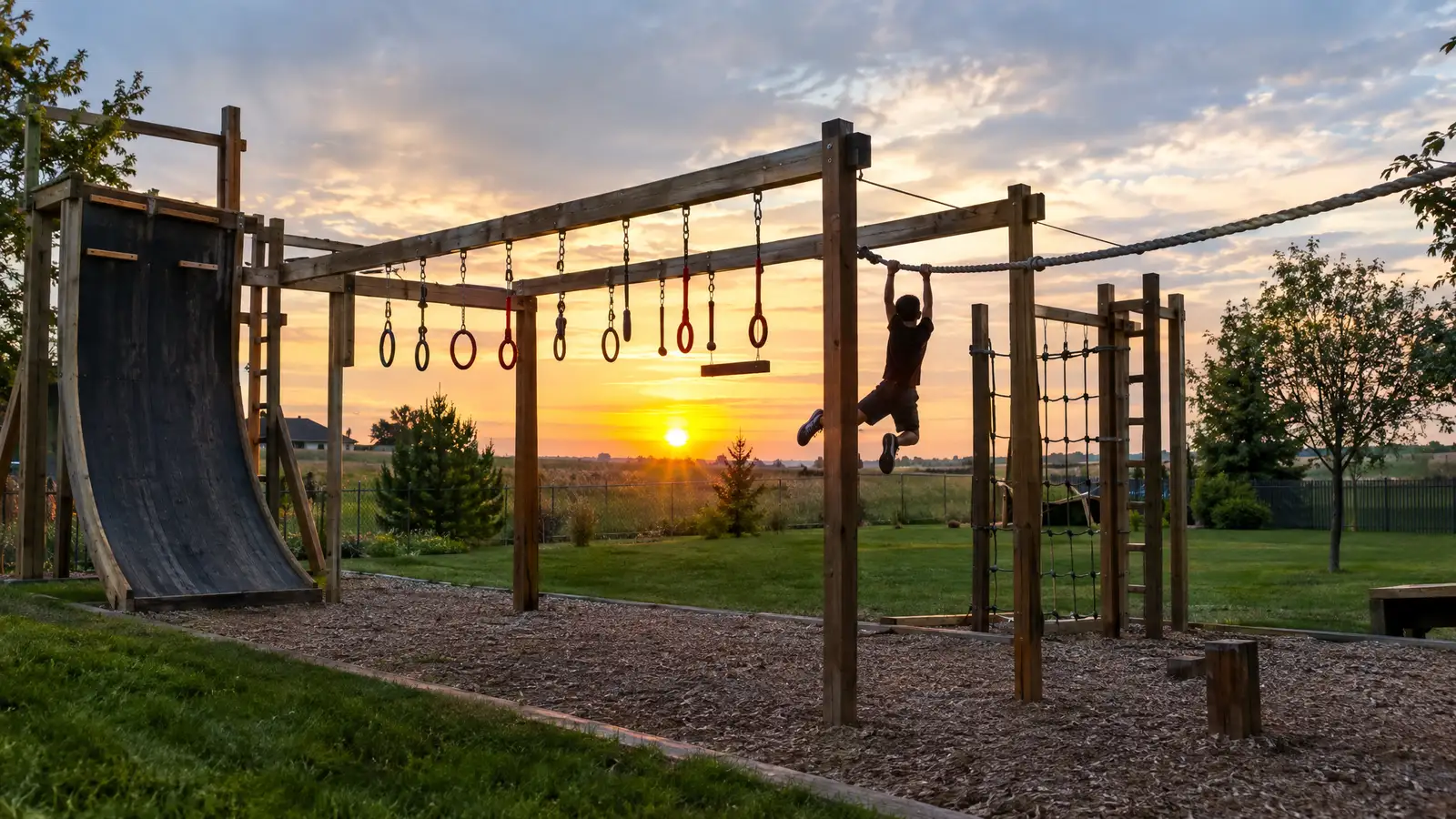
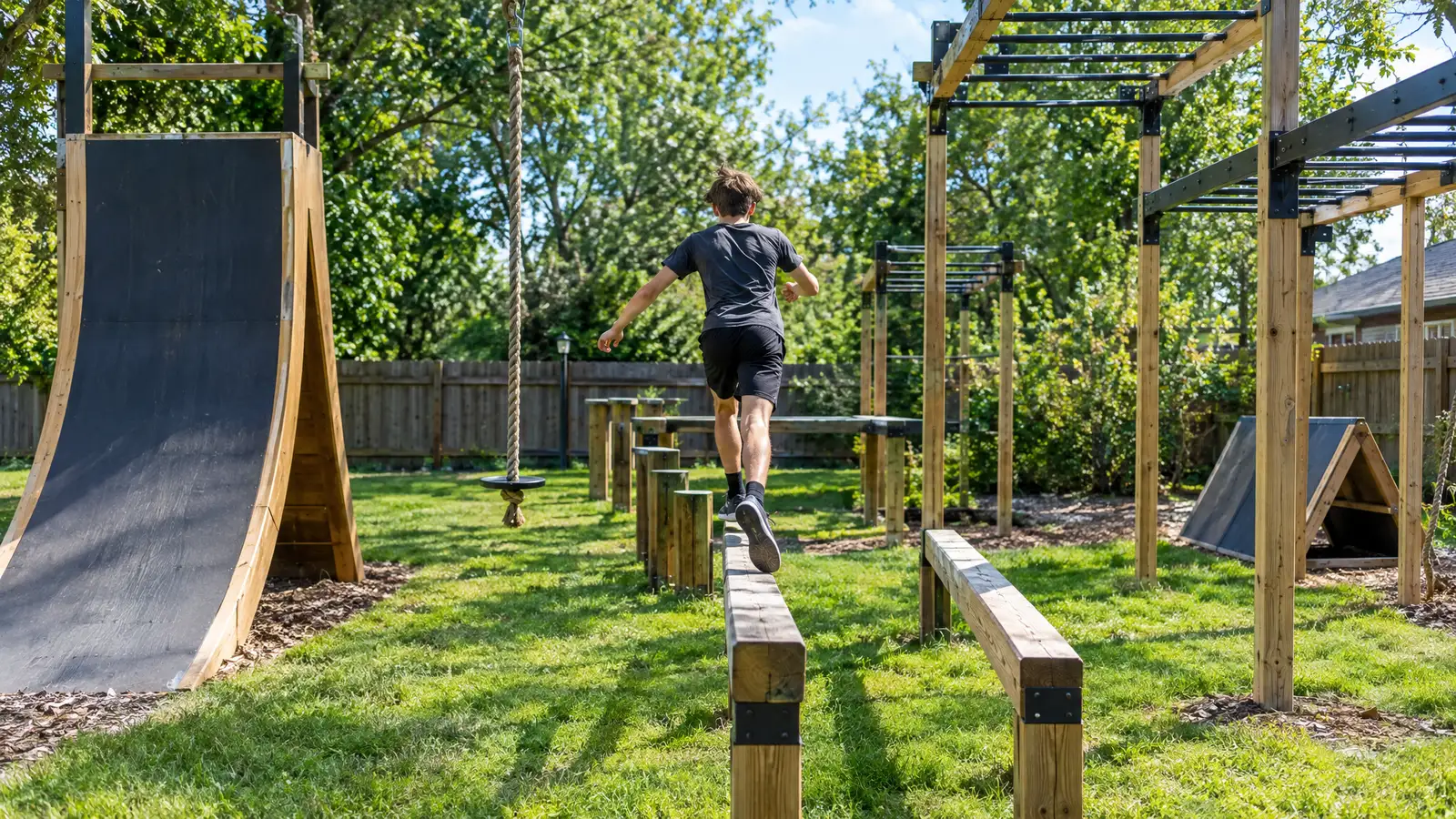
A good course flows from one obstacle to the next in a line or a loop. Start easy with a balance beam or stepping stones, build to hanging obstacles and finish with a challenge such as a warped wall.
Mark a clear start and finish.
Obstacle ideas
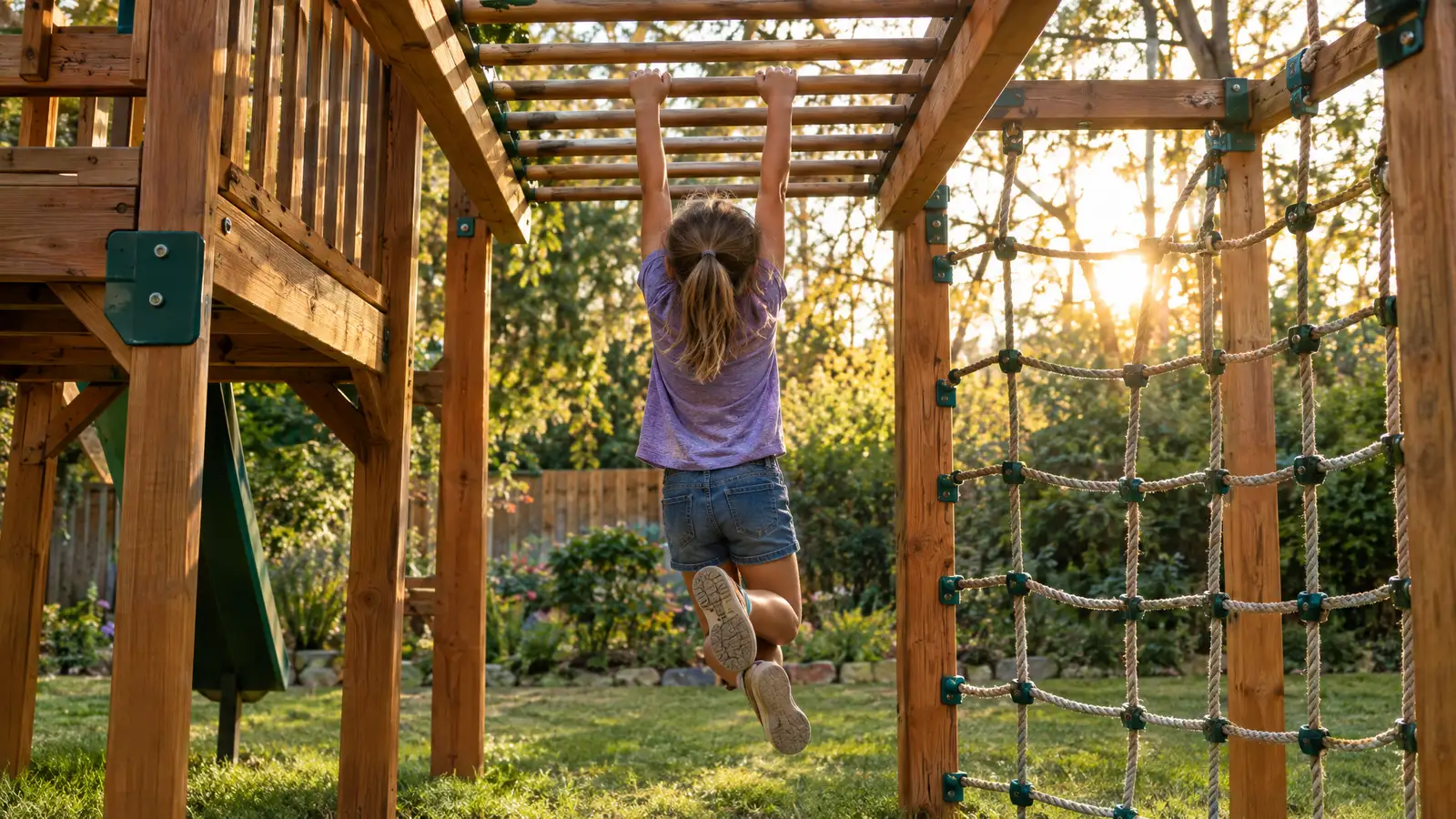
Warped wall, hanging rings, rope traverse, monkey bars, cargo net, slackline, balance beams, stepping pegs, a salmon ladder-style rung climb and a swing-and-grab rope.
Choose obstacles that suit the ages and abilities.
Make it adjustable
Obstacles that can be raised, lowered and swapped keep the course fresh and let younger kids join. Modular frames let you rebuild the course every season.
Add timers and score cards for fun.
Surface and space
Deep surfacing is key under hanging obstacles. Leave room around the course for running and falling. Make sure fences and trees are out of the zone.
Check all hardware often.
Supervision and rules
Set rules for one runner at a time, taking turns and no pushing. Supervise younger kids. Warm up first and stop when tired.
A ninja course is a fitness tool, so treat it that way.
Progress and levels
Build in steps: a beginner course with low obstacles, an intermediate course with a few hanging features and an advanced course with a warped wall and rings. Let kids graduate from level to level.
Use colored tags to mark the levels.
Keep it fun
Add timers, leaderboards and team challenges. Celebrate progress, not only speed. A little friendly competition keeps kids active and coming back.
Remember rest days and warm-ups.
Quick answers
How much space does a ninja course need?
It depends on the length. We can design courses for compact and large yards.
Can adults use it?
Equipment is rated for specific loads. We build to your needs, and we discuss adult use.