Active zone
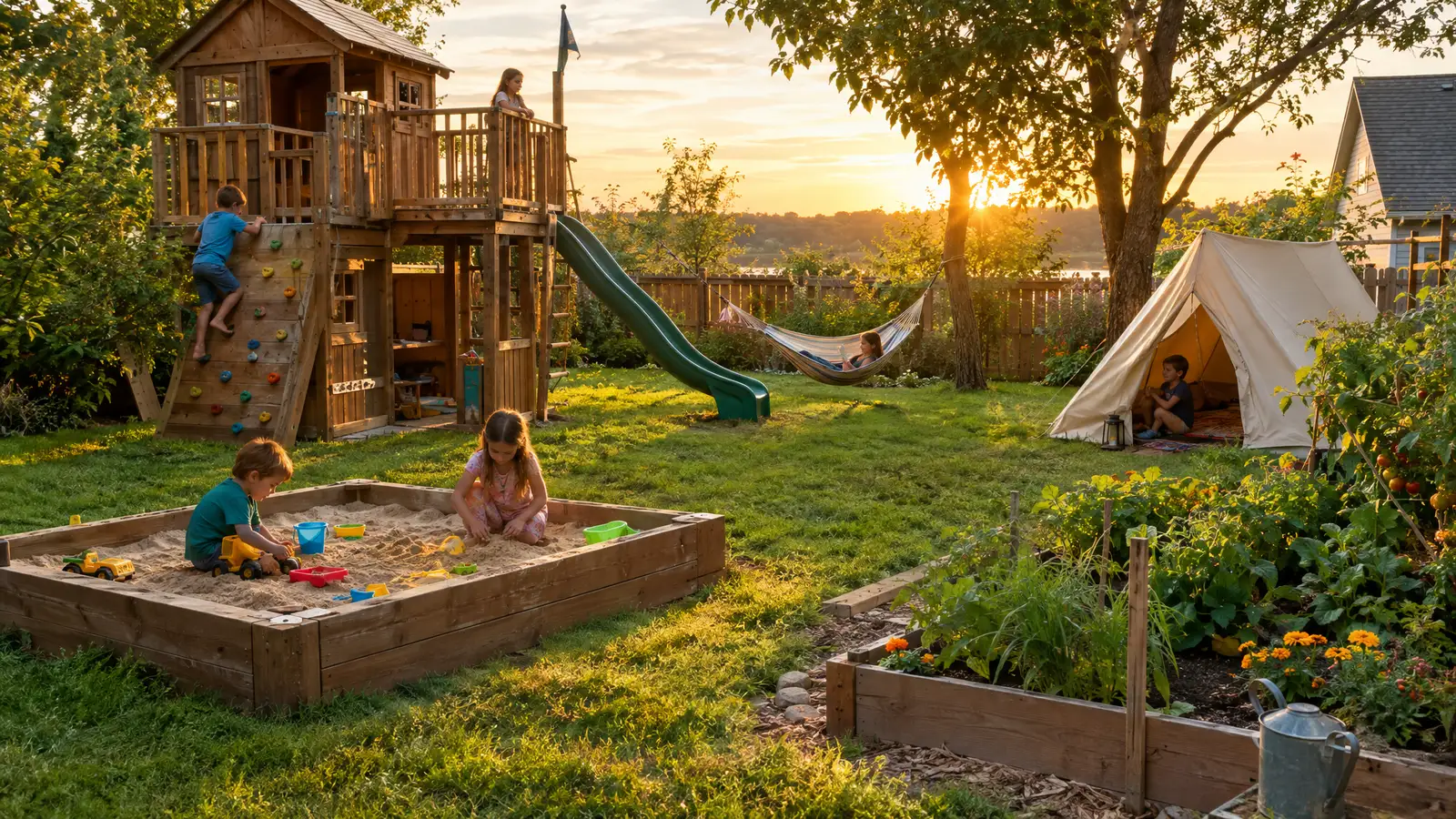
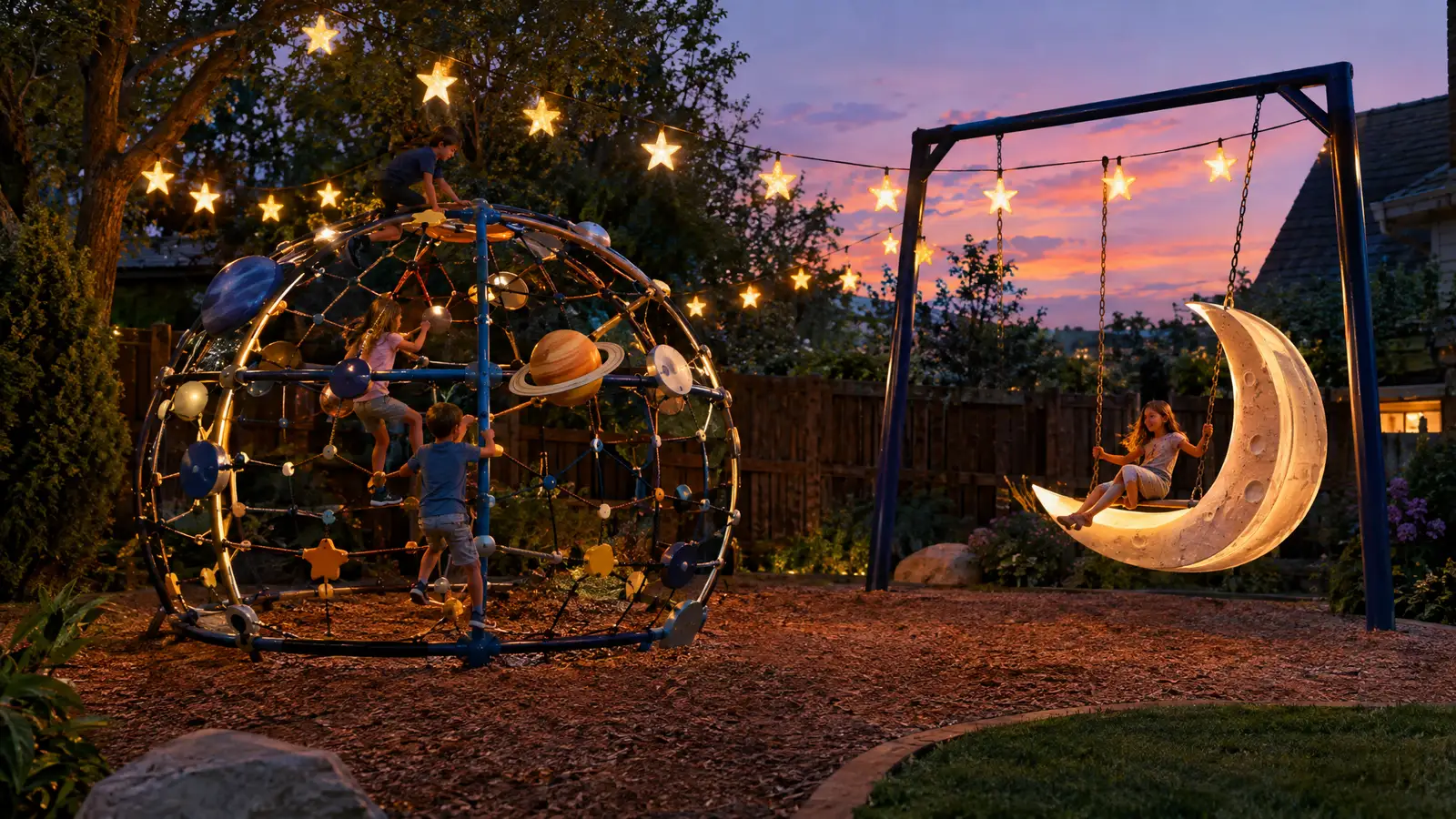
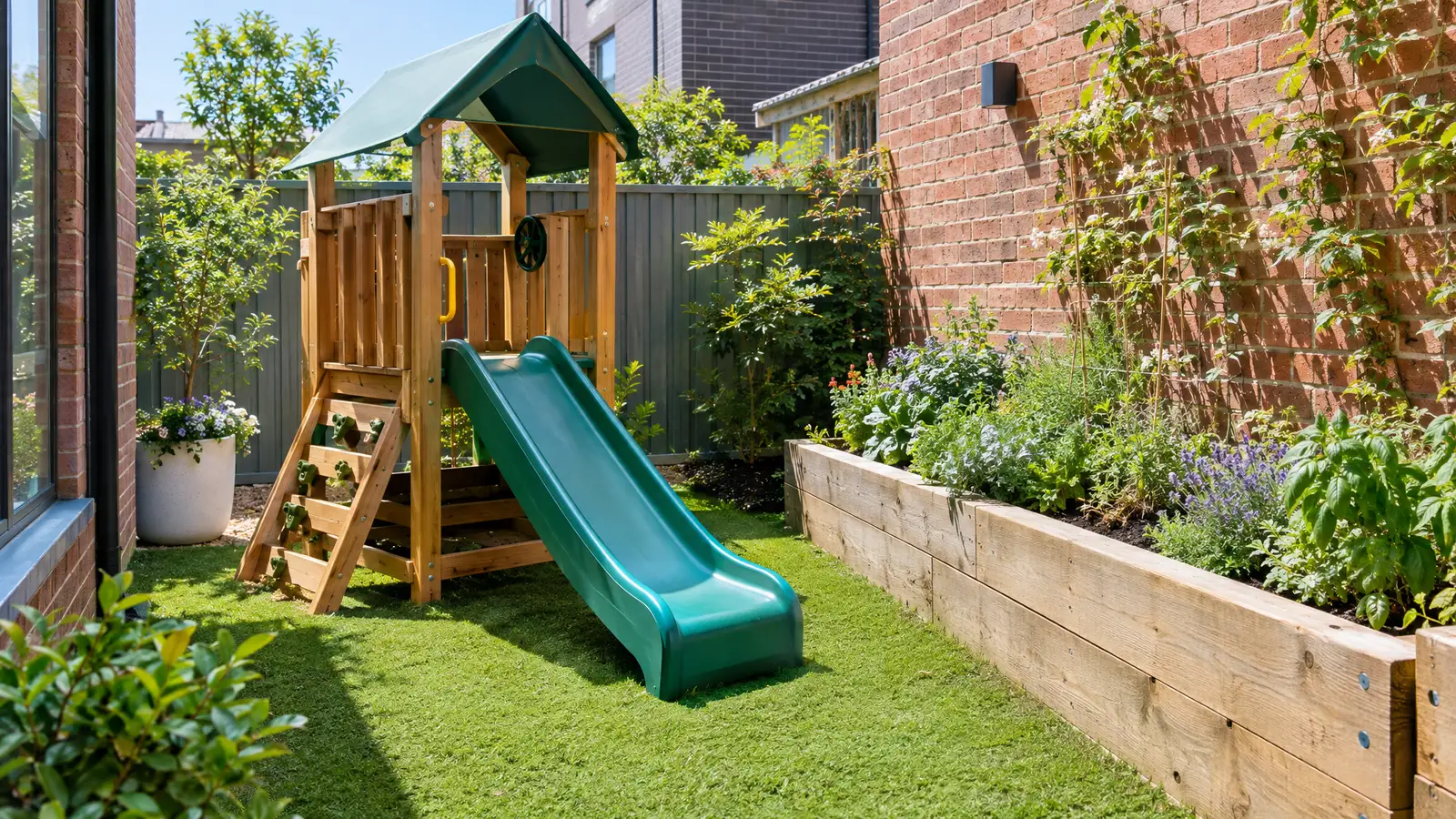
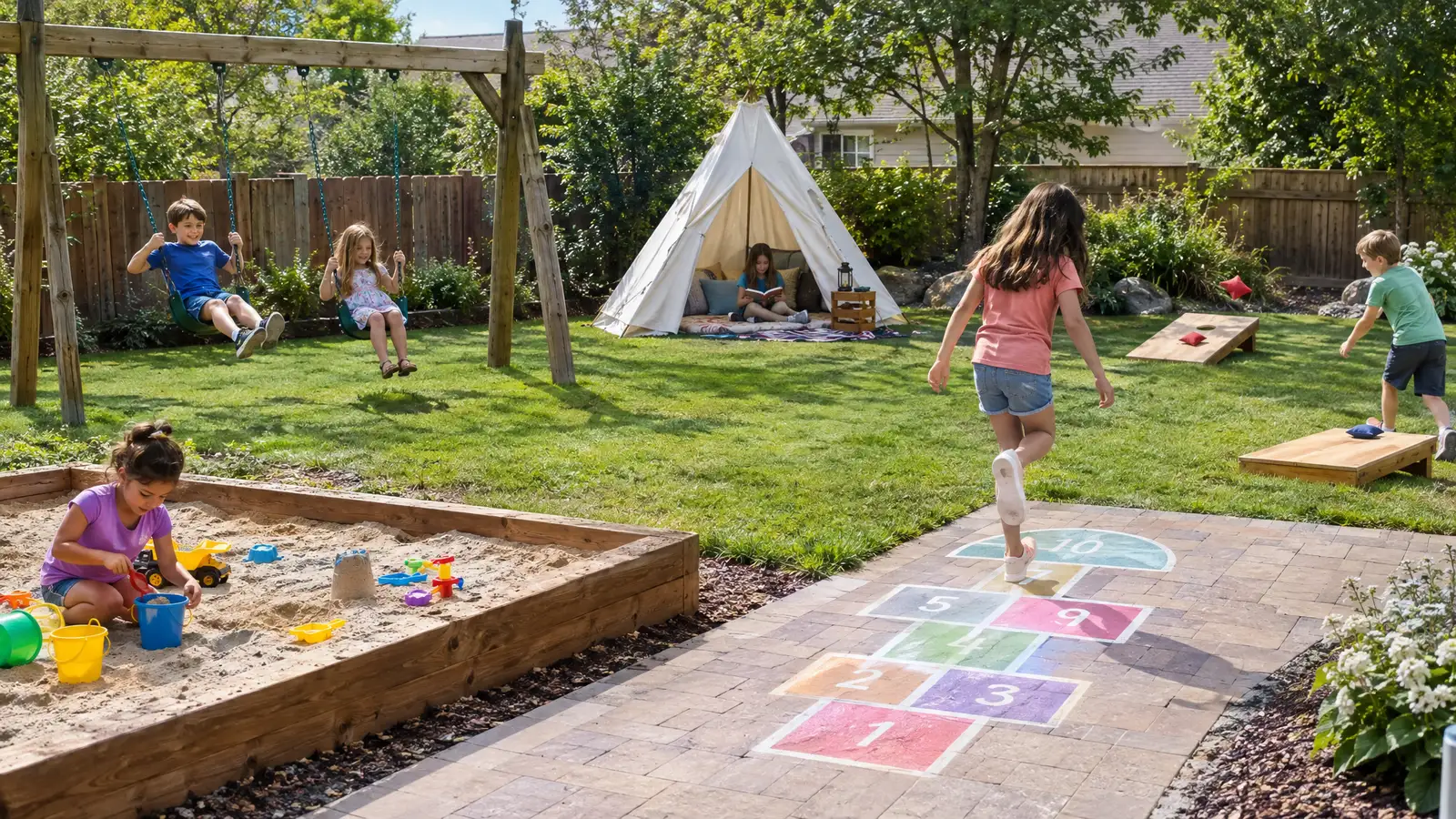
The swing set and climbing area is your high-energy zone. Add a ball wall, a basketball hoop or a hopscotch path.
Keep it away from quiet areas.
Sensory zone
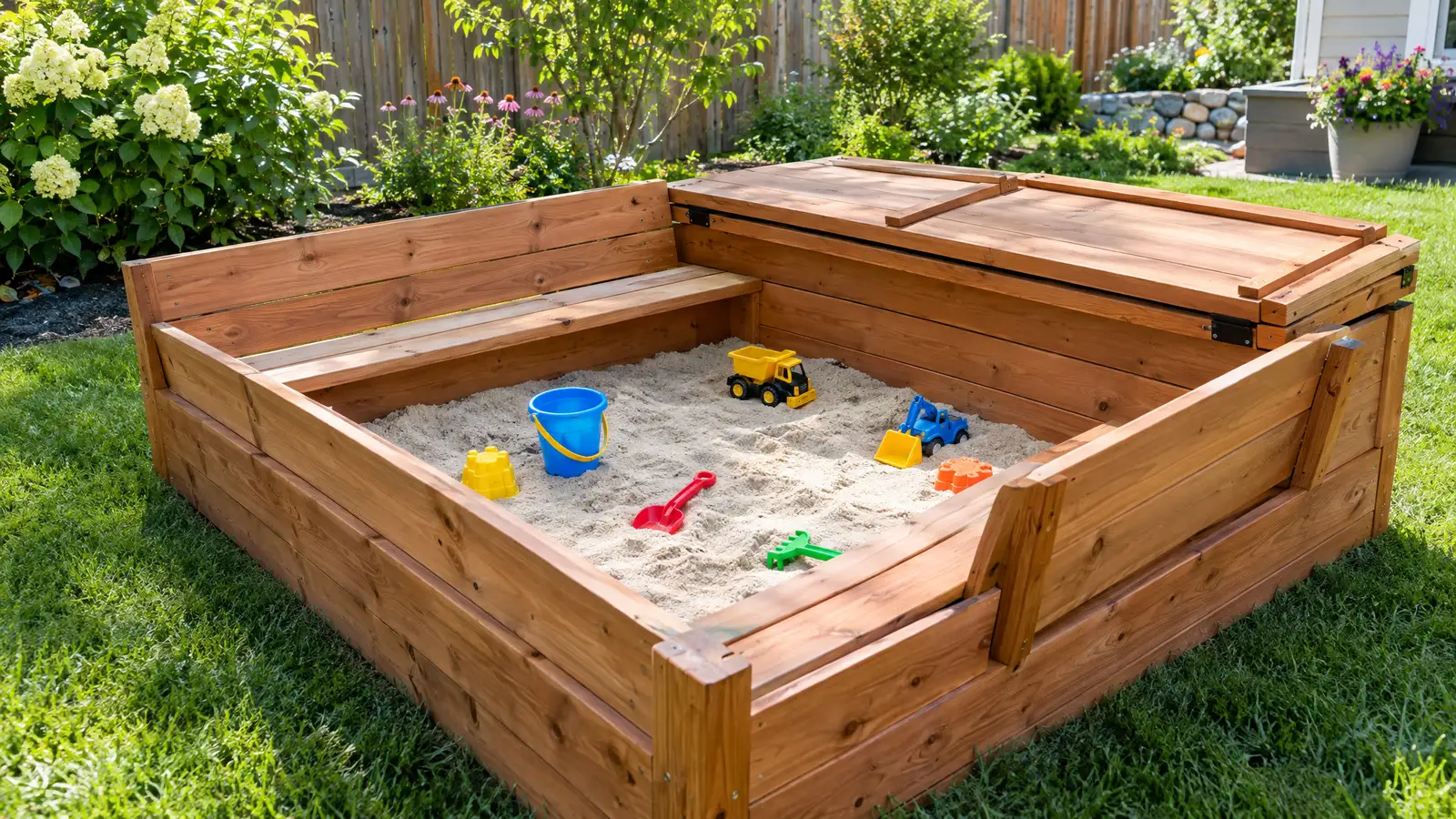
A sandbox, a water table, a mud kitchen and a garden bed give hands-on play. Place them in the shade.
Keep a hose and towels handy.
Quiet zone
A reading tent, a bean bag nook, a hammock or a playhouse porch gives space to rest. Hang wind chimes or lights for atmosphere.
Good for kids who need a break.
Games and gathering
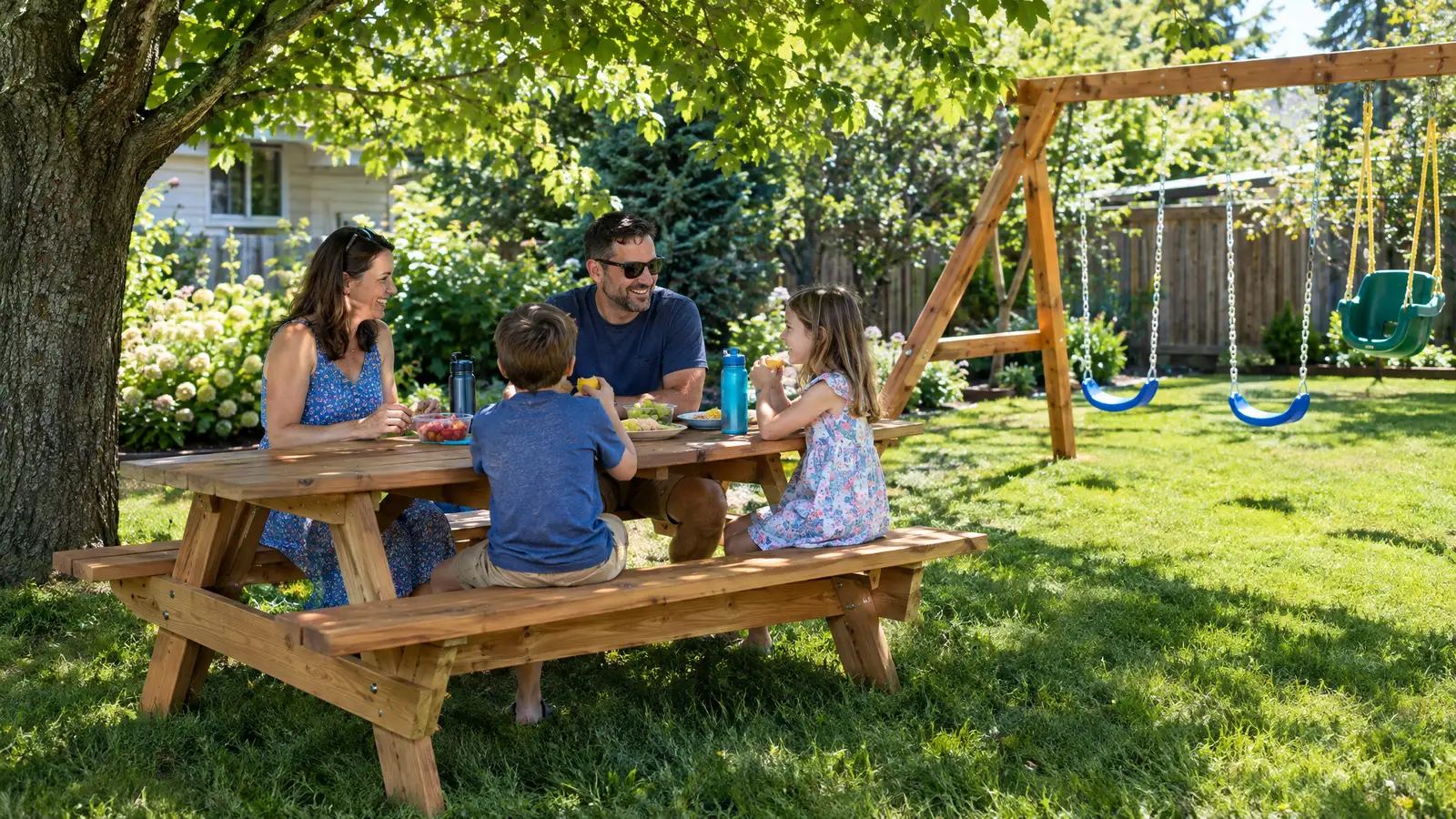
Cornhole, ring toss, giant chess, a movie screen and a fire-pit circle (for older kids with adults) turn the yard into a family space. A picnic table is the anchor.
Plan lighting for evenings.
Connect the zones
Stepping stones, a path of mulch or turf and a few borders tie the zones together. Place seating where adults can see all areas.
Our design service can map a plan for your yard.
Make zones flexible
Use removable borders, movable furniture and portable game sets so zones can change with the seasons and with the ages of the kids.
A storage bench or deck box makes cleanup easy.
Include the grown-ups
A fire pit, a hammock, an outdoor kitchen corner or a row of planters can make the yard a place for the whole family. When adults enjoy it, the kids do too.
Plan seating with a view of the play area.
Quick answers
Do I need all the zones?
No. Pick what suits your family and your space.
How do I keep it from looking cluttered?
Use borders, storage boxes and a consistent color palette.