Toddlers (1 to 3)
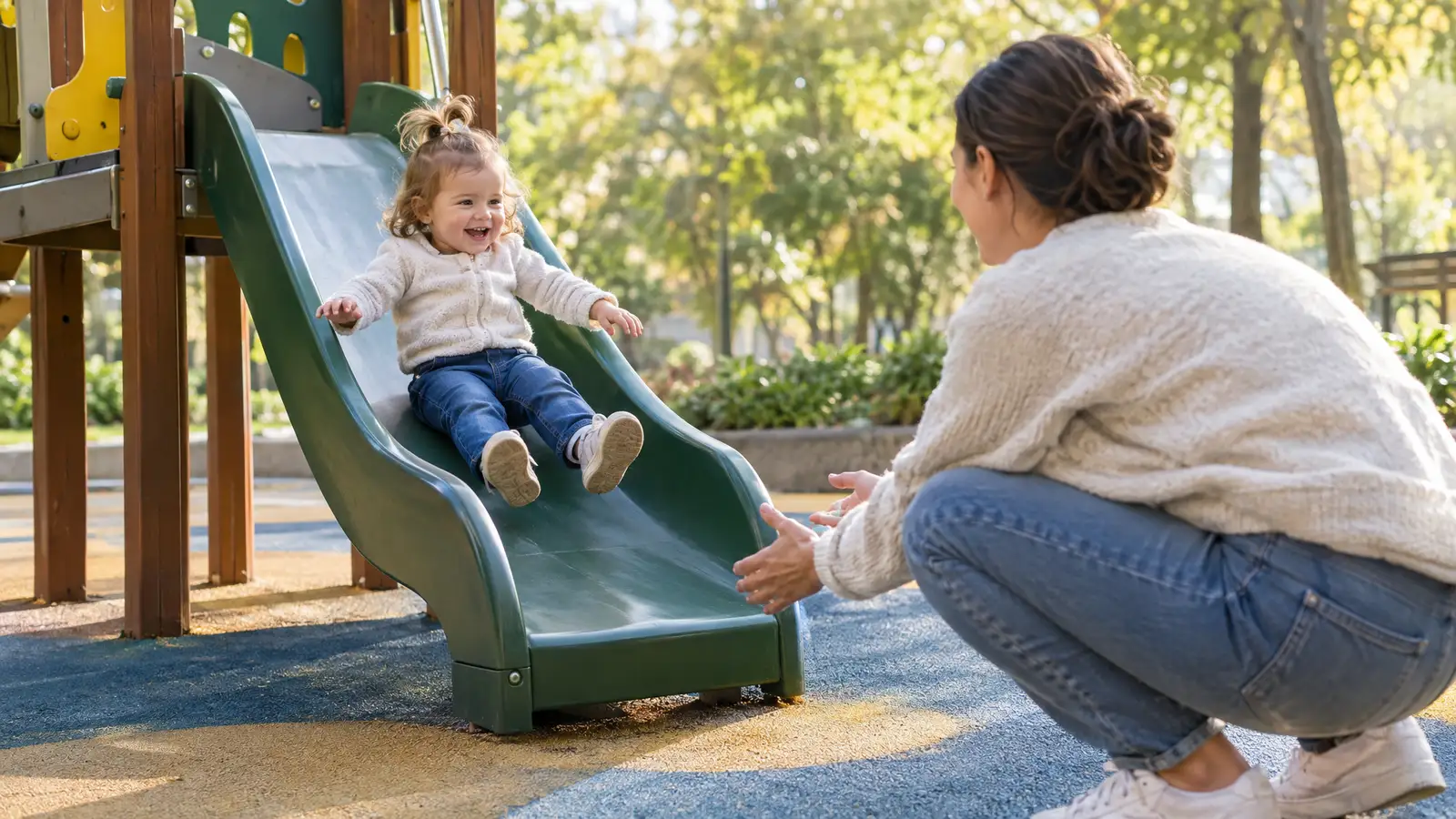
Low platforms, short gentle slides, bucket swings, crawl tunnels and steering wheels. Everything should be small, simple and close to the ground, with an adult always near.
Soft surfacing is a must.
Preschoolers (3 to 5)
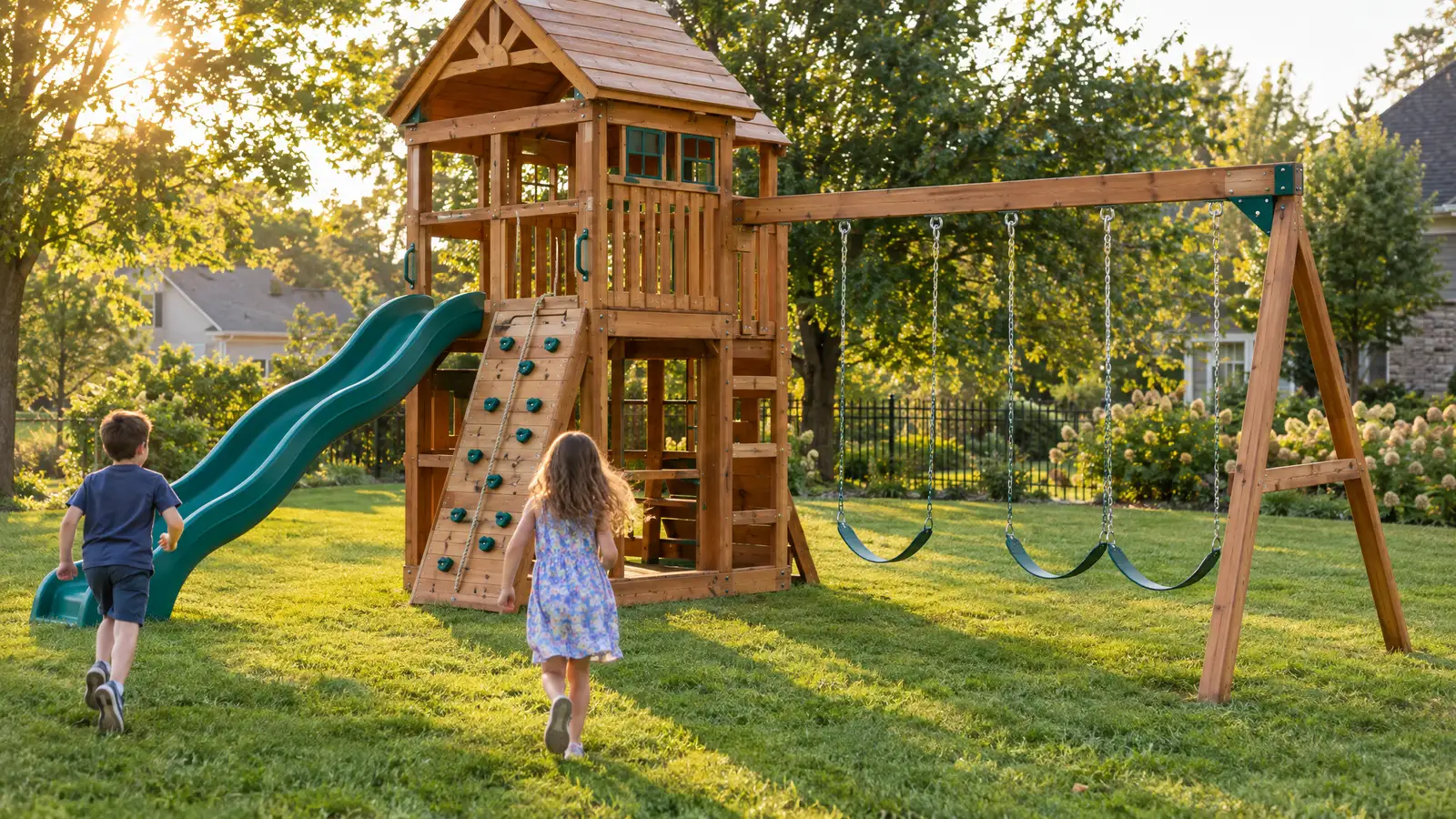
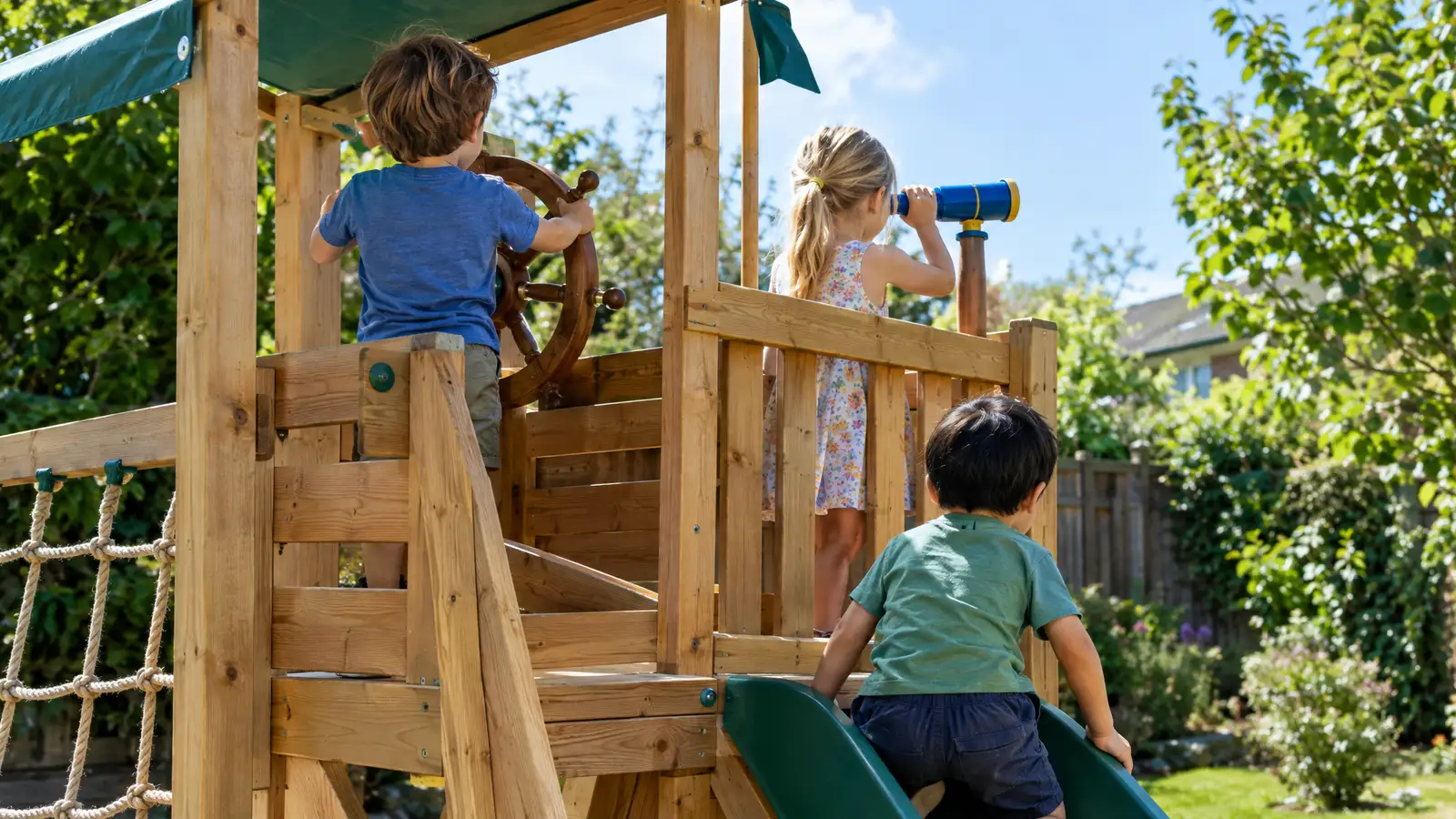
A small fort with a playhouse deck, a slightly taller slide, belt swings, a short climbing wall and a sandbox. Pretend play features and low climbers help build confidence.
Open sides need guardrails and supervision.
School age (5 to 9)
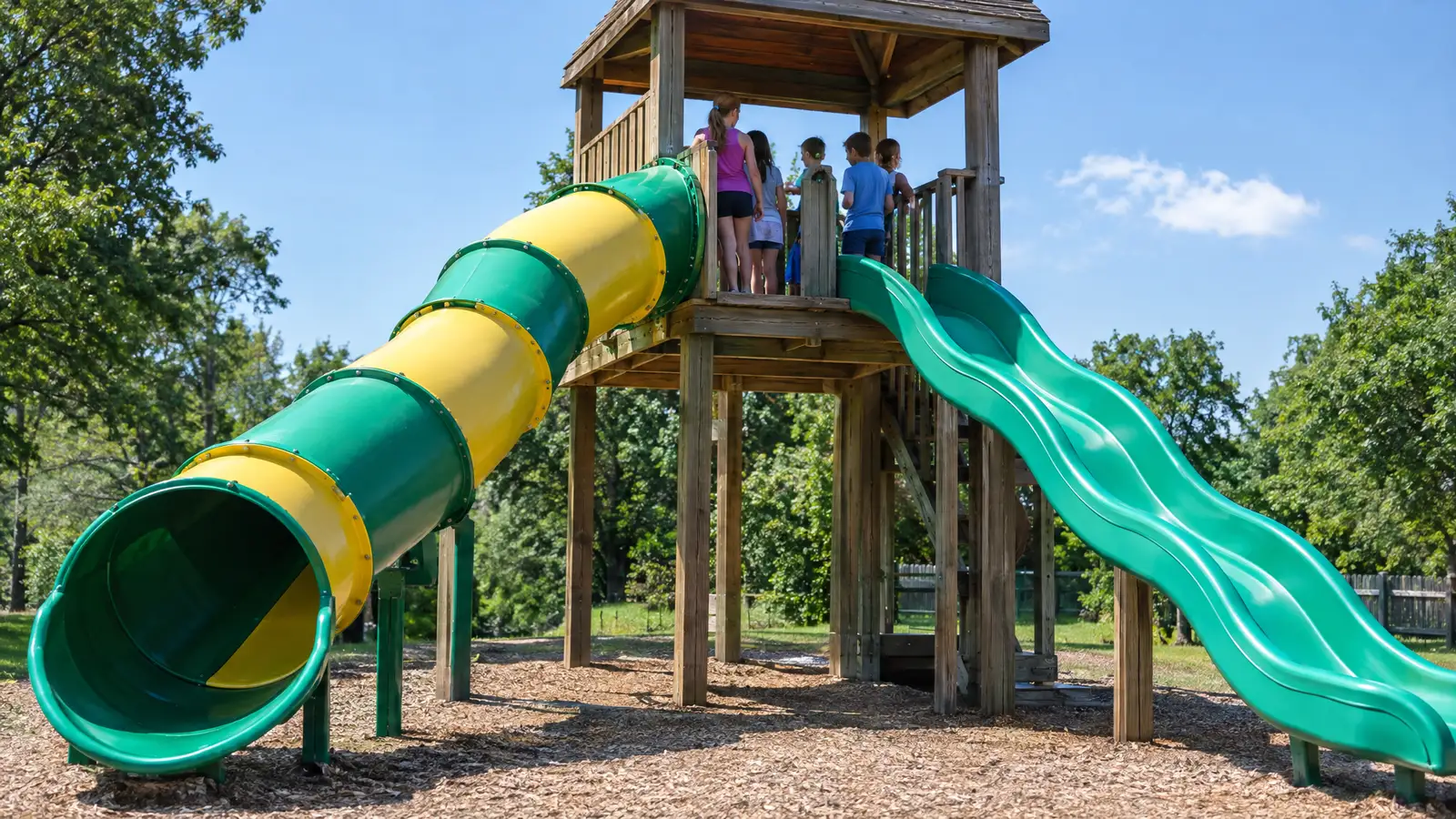
Taller towers, wave and tube slides, monkey bars, rock walls, rope ladders and swings with more room. Kids at this age want to climb, race and invent games.
Provide challenge in stages.
Tweens (9 to 12)
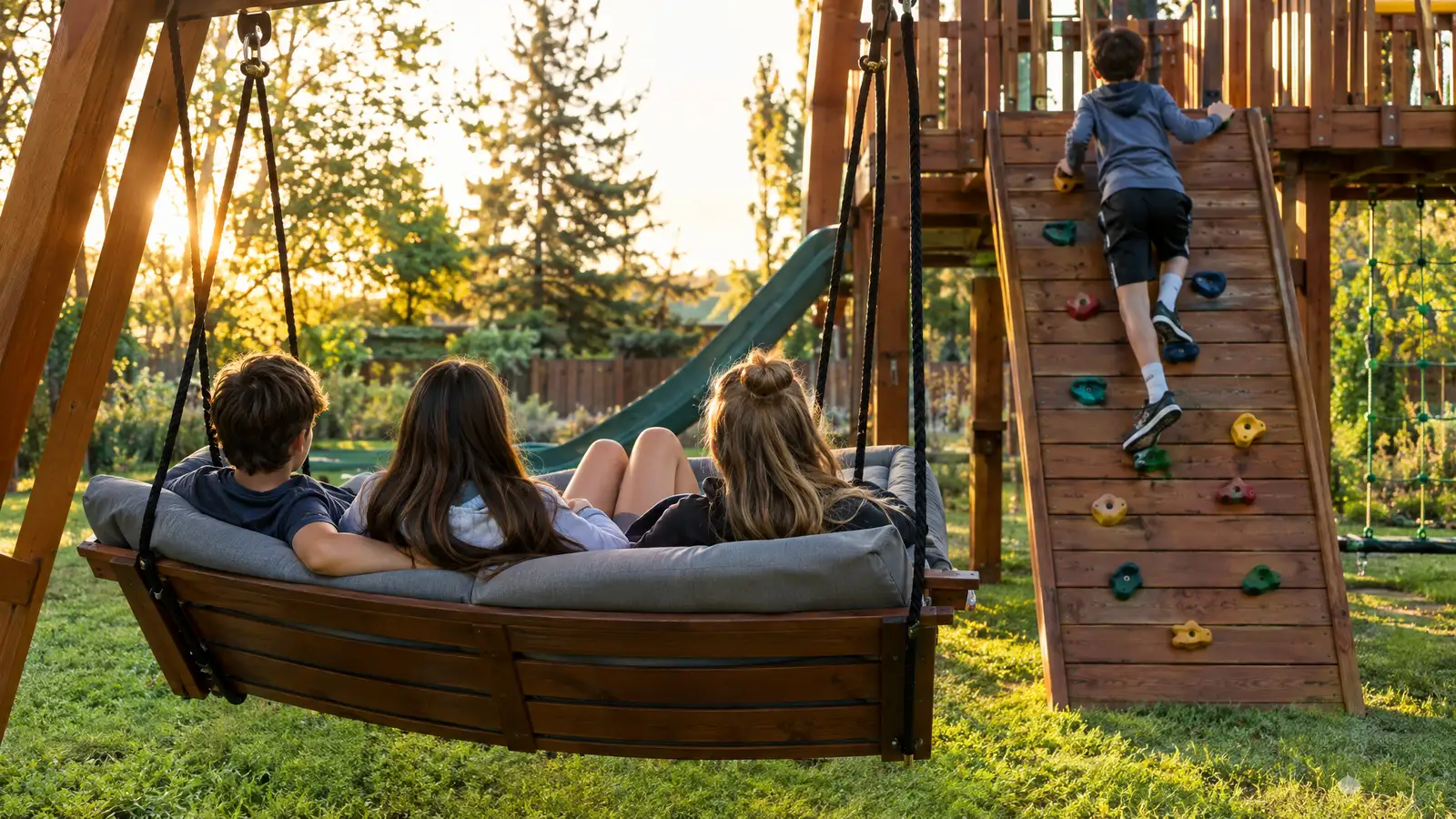
Ninja-style obstacles, climbing walls, hammock or lounge swings and hangout decks. They crave challenge and a place to gather with friends.
Heights and loads should be sturdy.
Teens and beyond
Strength and fitness features, a hangout swing, a fire-pit nearby and room for friends. Many teens use a set less, and a flexible space is a good investment.
Plan to adapt it as interests change.
Buy for the stage after this one
Kids outgrow equipment faster than adults expect. If your child is three, think about what they will want at six. A frame that accepts a taller deck, a climbing wall or monkey bars later extends the life of the set.
Avoid features that only suit a narrow age window unless they can be removed or converted.
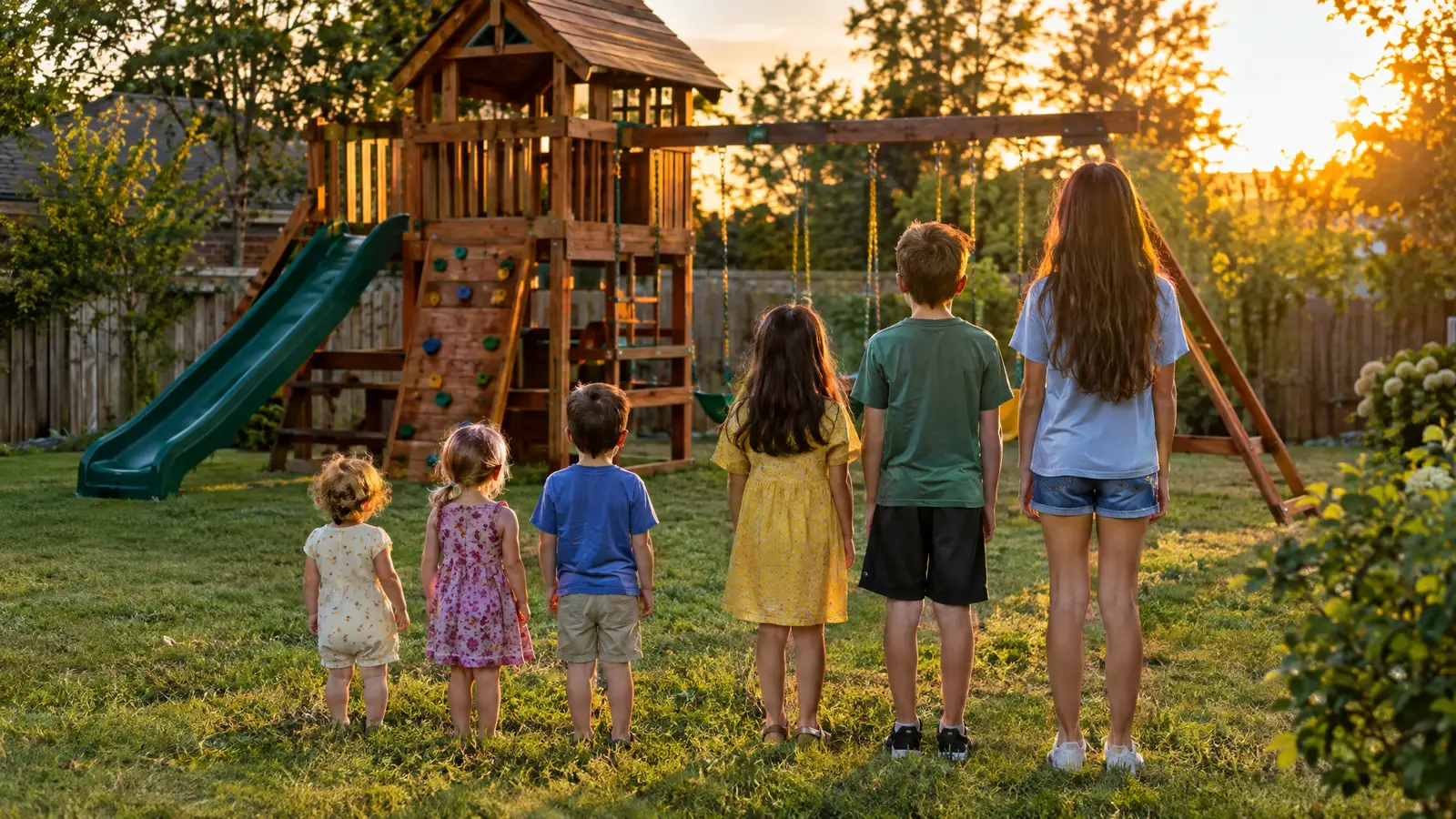
When ages are far apart
Create two zones. Put toddler features low and close to where you sit, and put big-kid challenge on the other side of the set. Keep fast swing paths away from little ones.
Taking turns and a few simple rules matter just as much as the layout.
Quick answers
What age is a swing set good for?
Sets can serve toddlers through teens, but the equipment should match the age. Sets with removable toddler features and add-ons for older kids last the longest.
Should I buy for the age they are now?
Buy for now and plan ahead. A flexible frame lets you add features as they grow.