Graying
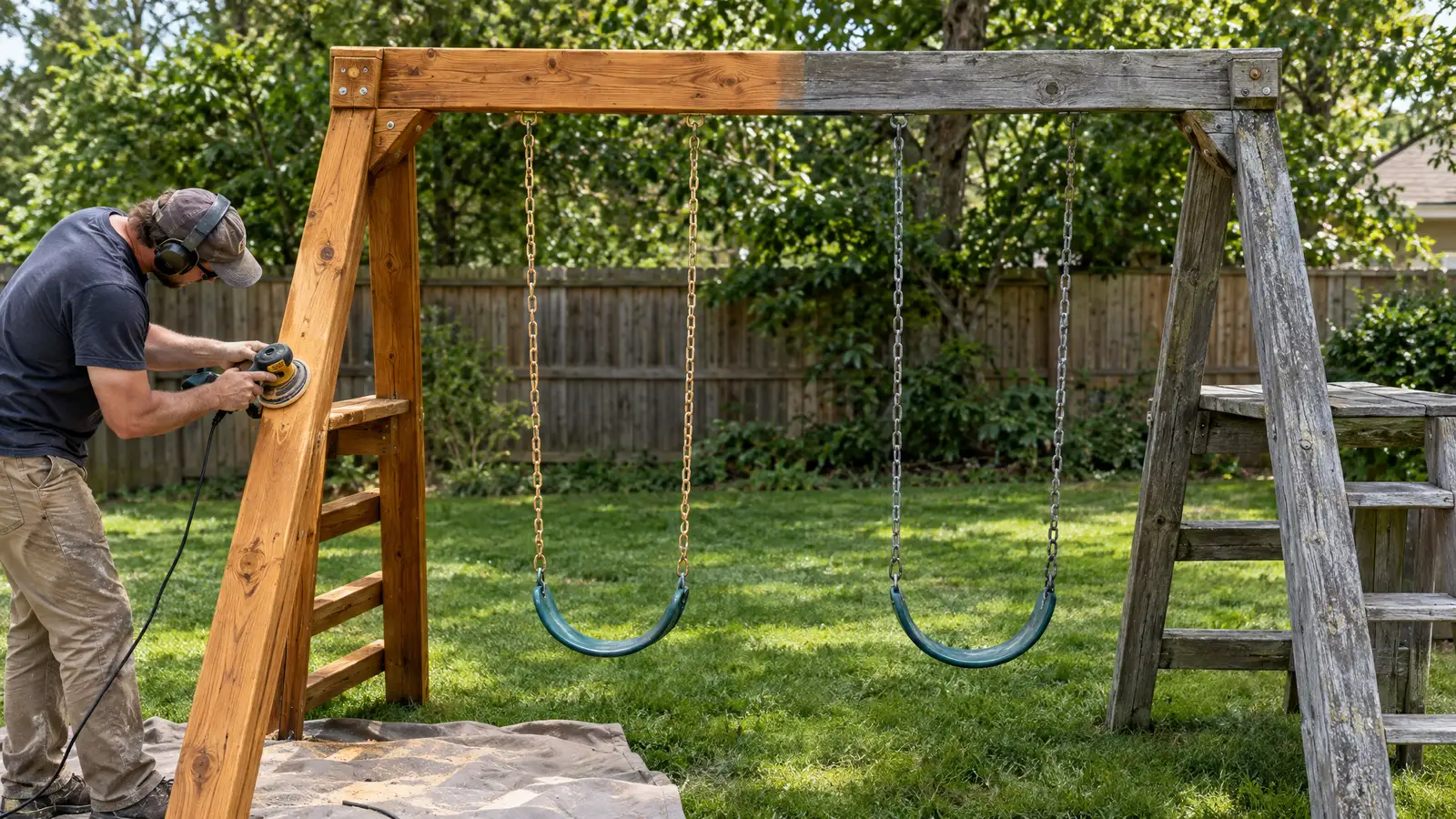
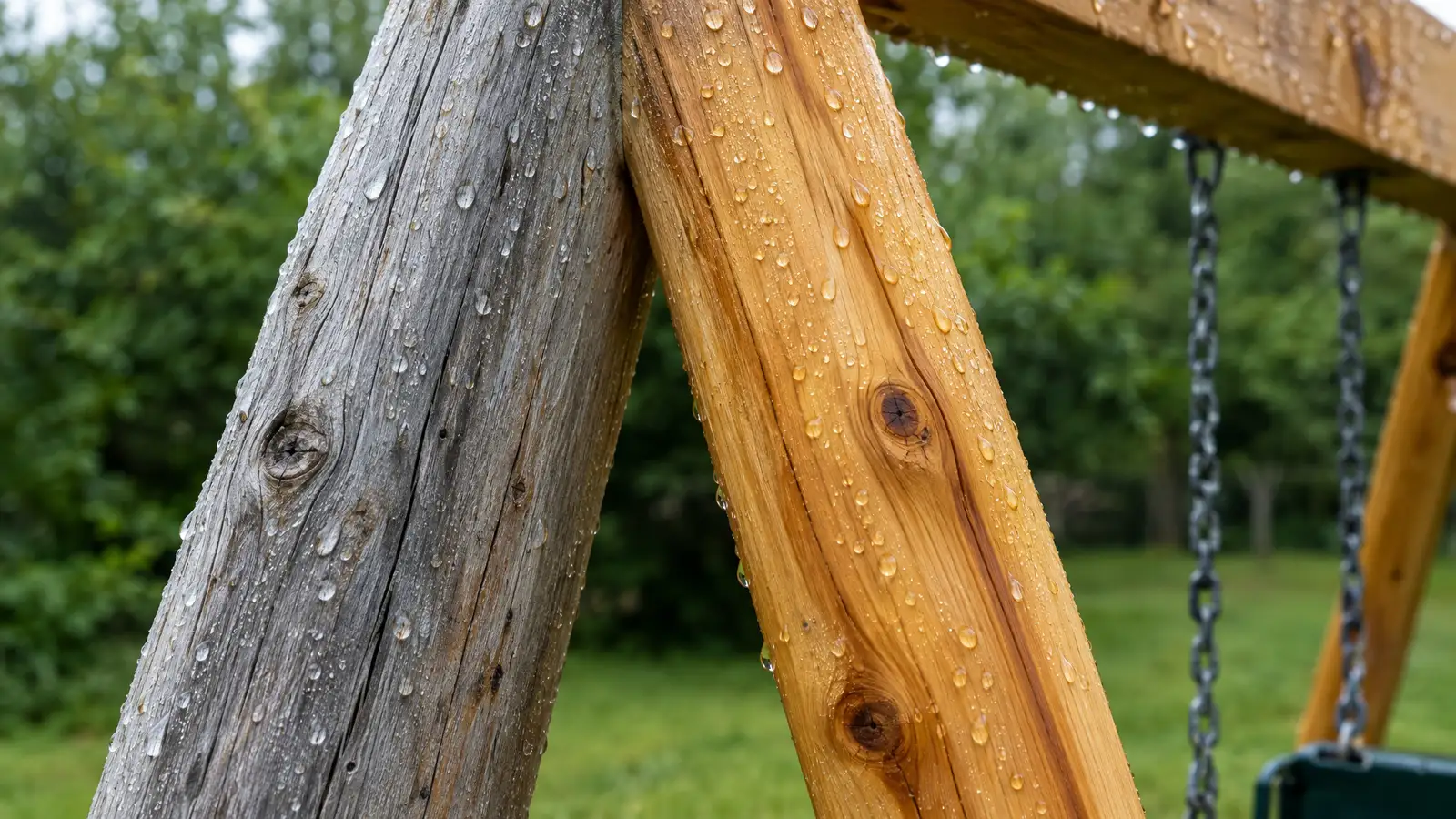
Sun and rain bleach the surface of wood to a silver gray over a season or two. It is mostly cosmetic. A good cleaning and a protective finish can bring the color back.
Unfinished cedar can look nice gray, but it will not be as protected.
Checking and cracks
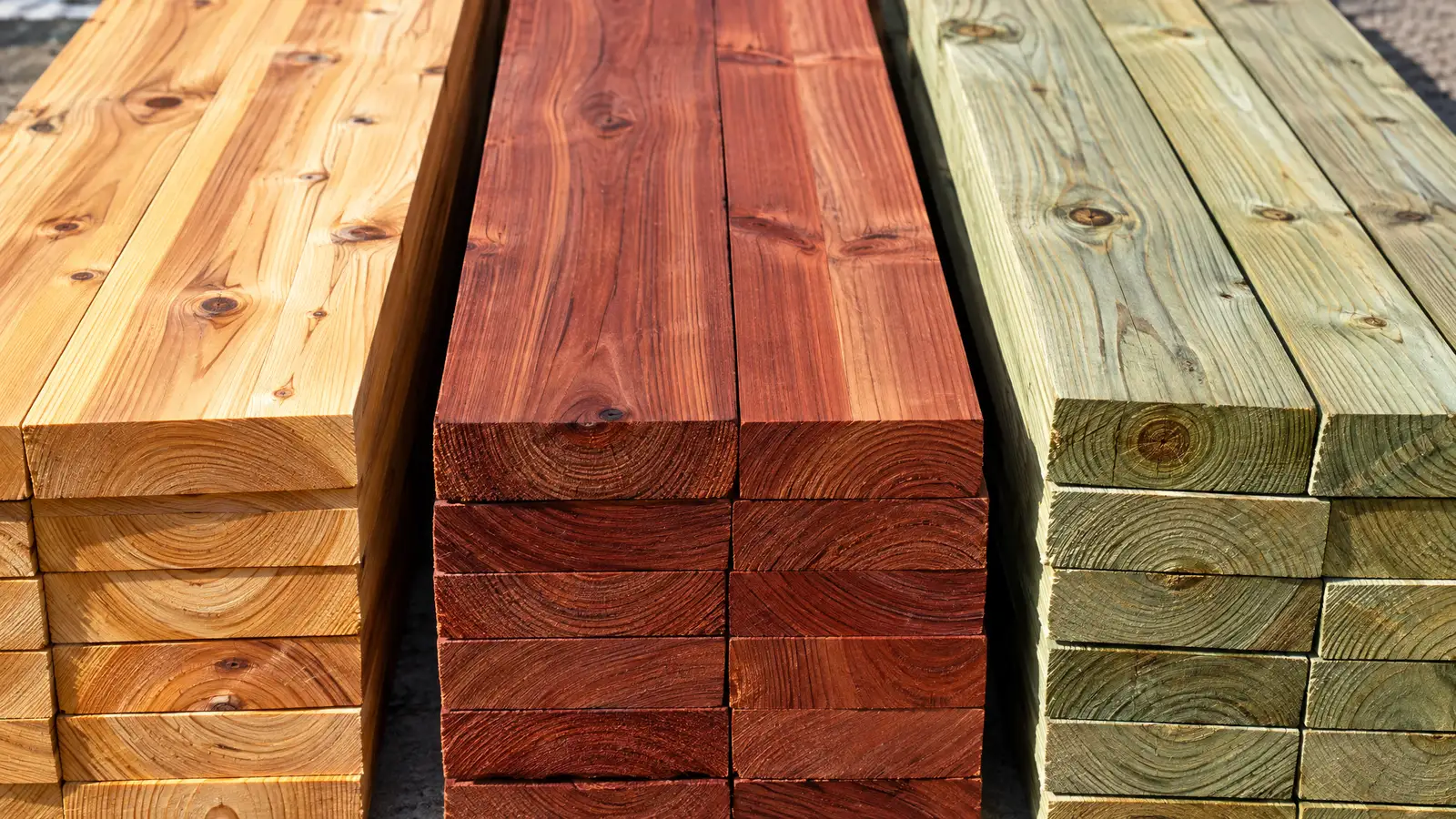
As wood dries and swells it develops small cracks called checks. Small checks are normal and often not structural. Large splits near joints or bolts deserve a look.
Sanding and sealing help keep them from growing.
Mildew and moss
Shady, damp spots grow mildew and moss. They make the surface slippery and speed decay. Wash them away with a gentle cleaner and let the wood dry.
Trim branches that keep the set in shade.
Rot
Rot starts where water sits, often at post bases and horizontal surfaces. Soft, spongy or crumbling wood is a warning sign.
Catch it early with a screwdriver test and repair or replace affected parts.
Slowing it down
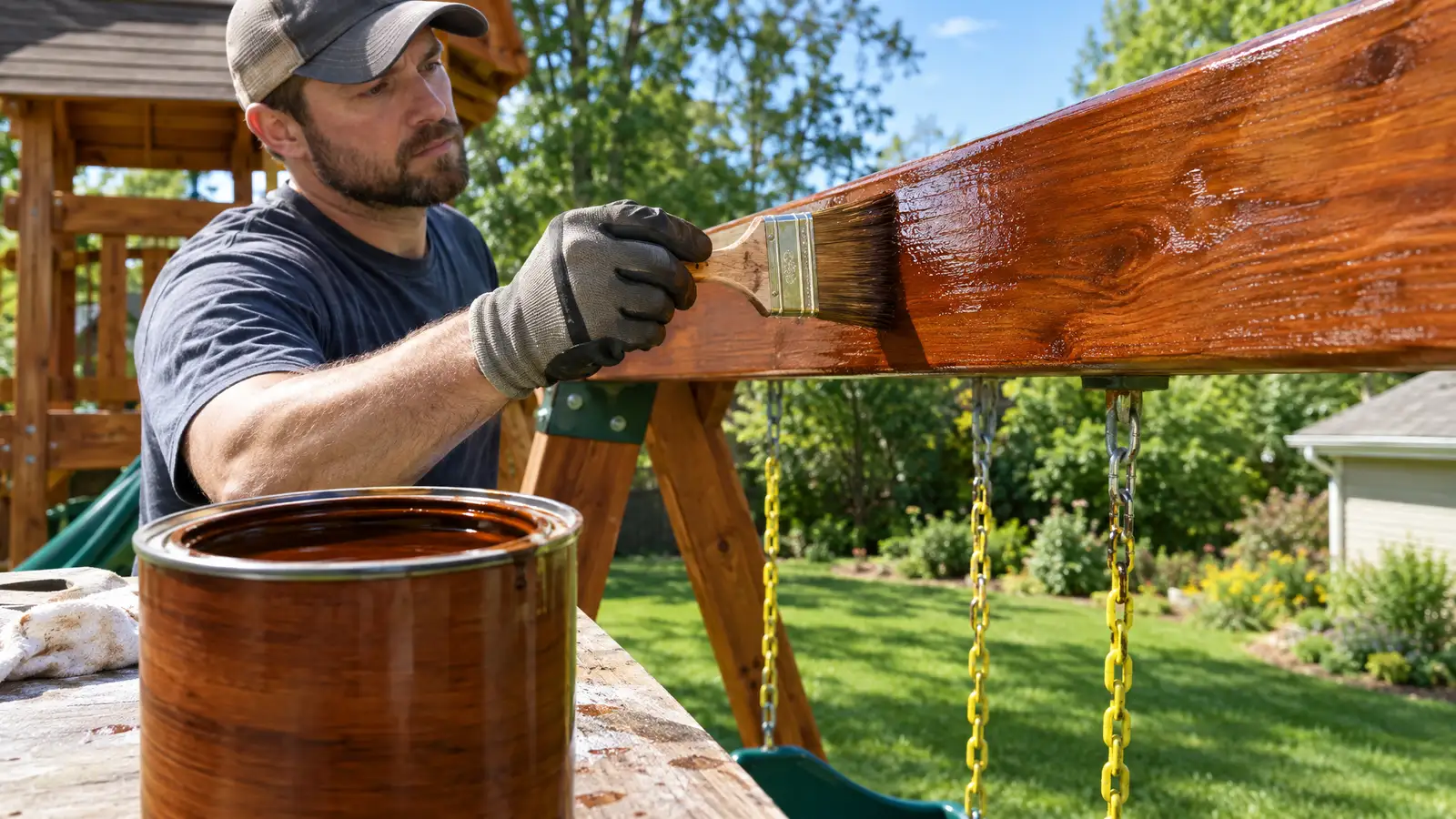
A fresh finish every year or two, drainage under the set, a border that keeps wood off the ground and a yearly inspection make a big difference.
We offer restoration if a set has gone too long without care.
Slowing down weathering
Shade, airflow, a finish refreshed on schedule and keeping wood off wet ground slow down weathering. Trim branches that shade the set and keep sprinklers from soaking it.
A border and gravel base under post bases help water drain away.
When weathering becomes a problem
Look for deep splits near bolts, soft wood at post bases and rot where wood meets wood. These deserve repair or replacement.
Surface graying and small checks are mostly cosmetic.
Quick answers
Is graying a problem?
Not by itself, but it means the finish has worn off. Clean and refinish to protect the wood.
How can I tell if wood is rotten?
Press a screwdriver into it. If it sinks in easily or the wood crumbles, it is rotten.