Molded plastic
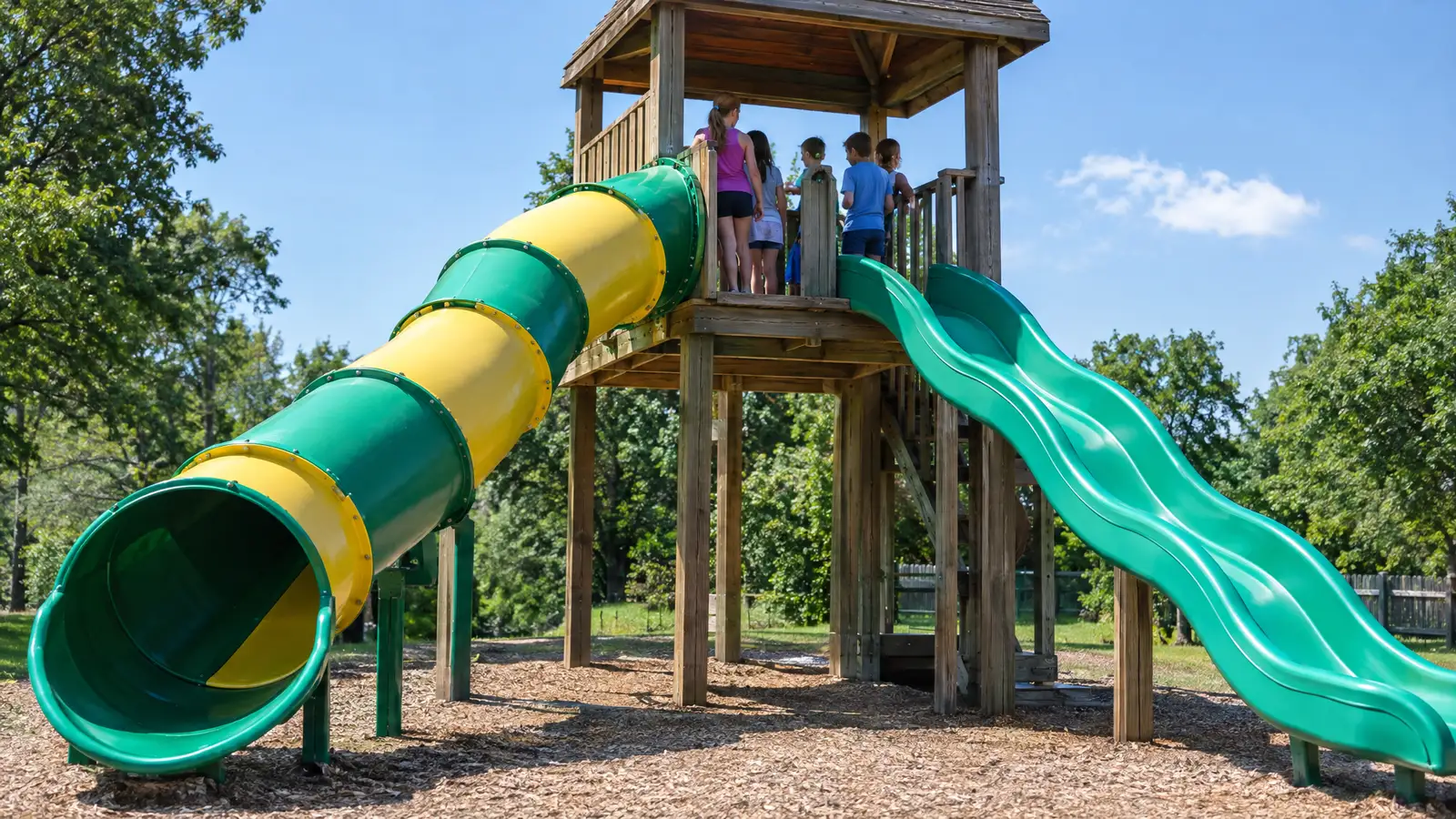
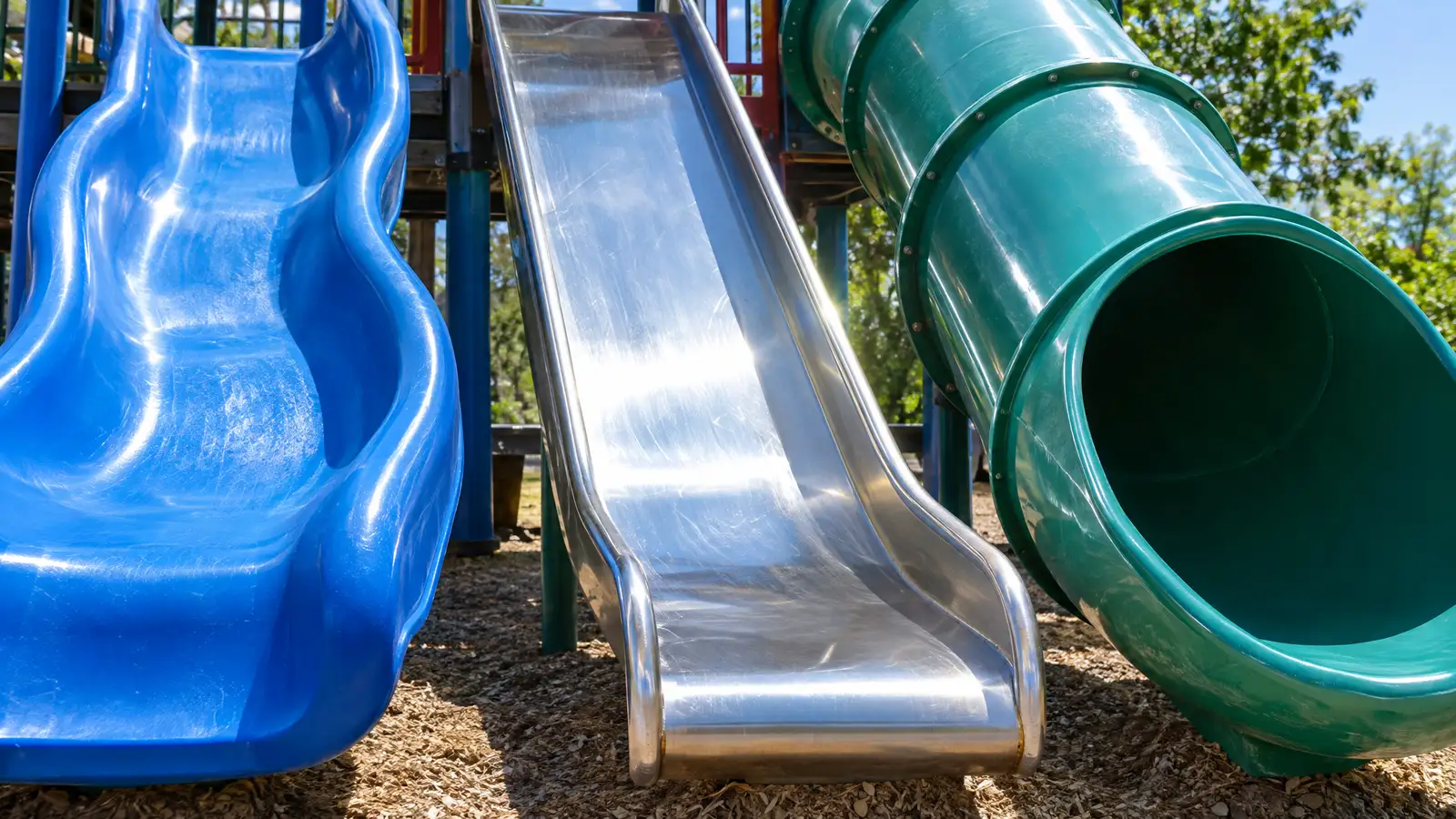
Plastic slides are the most common. They are available in many shapes and colors, are smooth and comfortable and stay cooler than metal. UV can fade or weaken them over many years.
Wave and tube slides are almost always plastic.
Stainless steel
Stainless slides are very fast and long lasting. They conduct heat, so they can get hot in full sun. Position them in the shade or facing away from afternoon sun.
They resist scratching and stand up to heavy public use.
Fiberglass
Fiberglass slides are strong and can be molded into large, shaped slides. They are common on commercial play structures and in tube and spiral designs.
They can be more expensive.
Hill slides and embankment slides
A slide set into a slope uses the ground itself and needs no deck. It is gentle and fun for a range of ages.
Embankment slides need a proper slope and a safe run-out.
Heat and static
Test slides with your hand on hot days. Some plastic slides can build static electricity, and cochlear implant users are sometimes advised to take care. Shade and lighter colors help with heat.
Match the slide to the climate and the child.
Matching the slide to the deck
The slide has to suit the deck height. A slide that is too short and steep can be too fast, and one that is too long may be awkward. The exit should be near ground level with a surfaced runout.
Ask for the slide length that matches your deck height and the manufacturer’s guidance.
Care for slides
Keep slides clean and free of grit, which scratches the surface. Check for cracks and sharp edges. In winter, store removable slides or clear ice before use.
Replace slides that are cracked, faded to brittleness or damaged.
Quick answers
Which slide is best for hot climates?
Plastic slides in light colors with shade stay cooler than metal. Position any slide away from direct afternoon sun.
How long do plastic slides last?
Many last for years. UV is the main enemy, so shade and cleaning help.