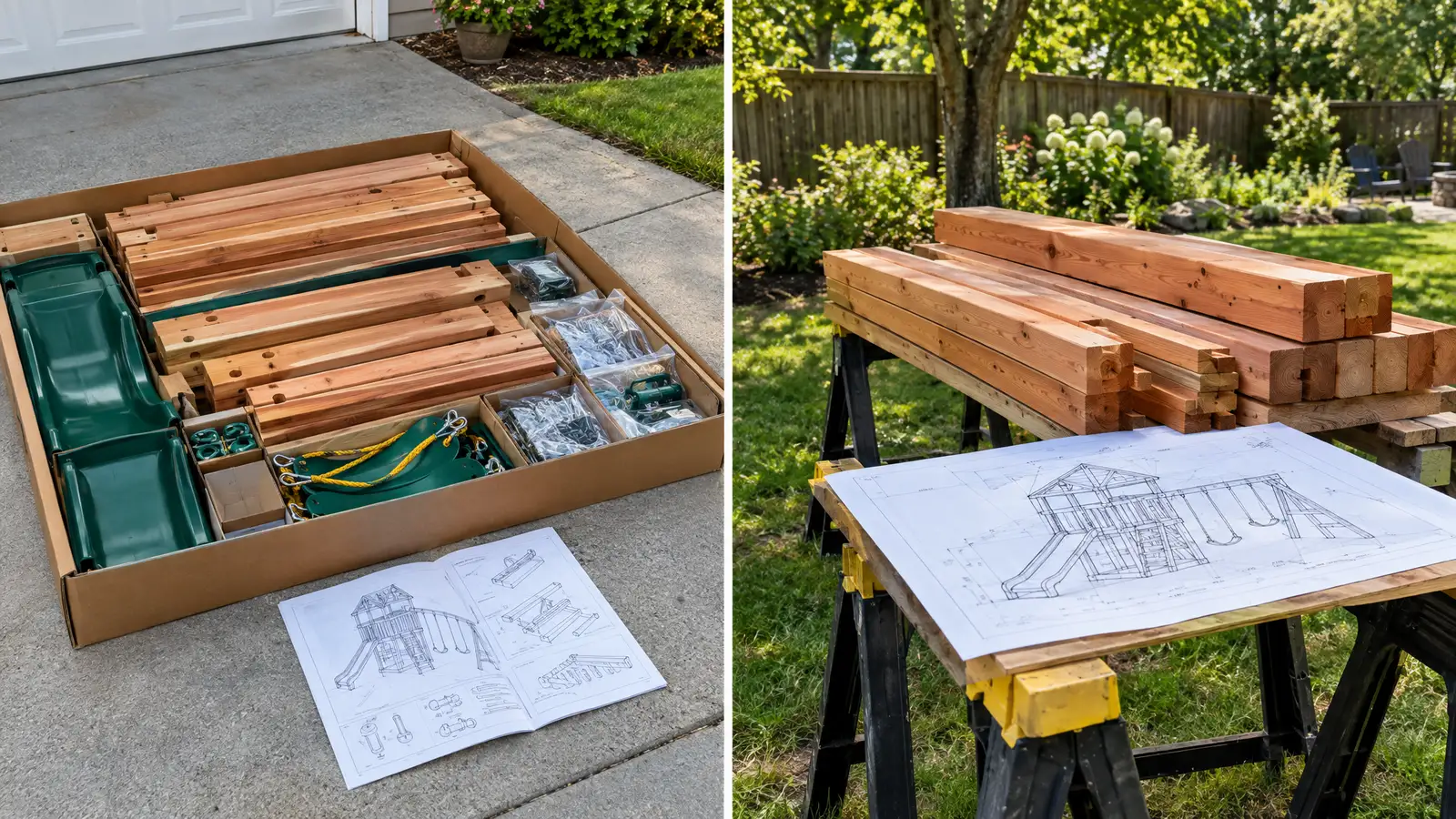

About the design
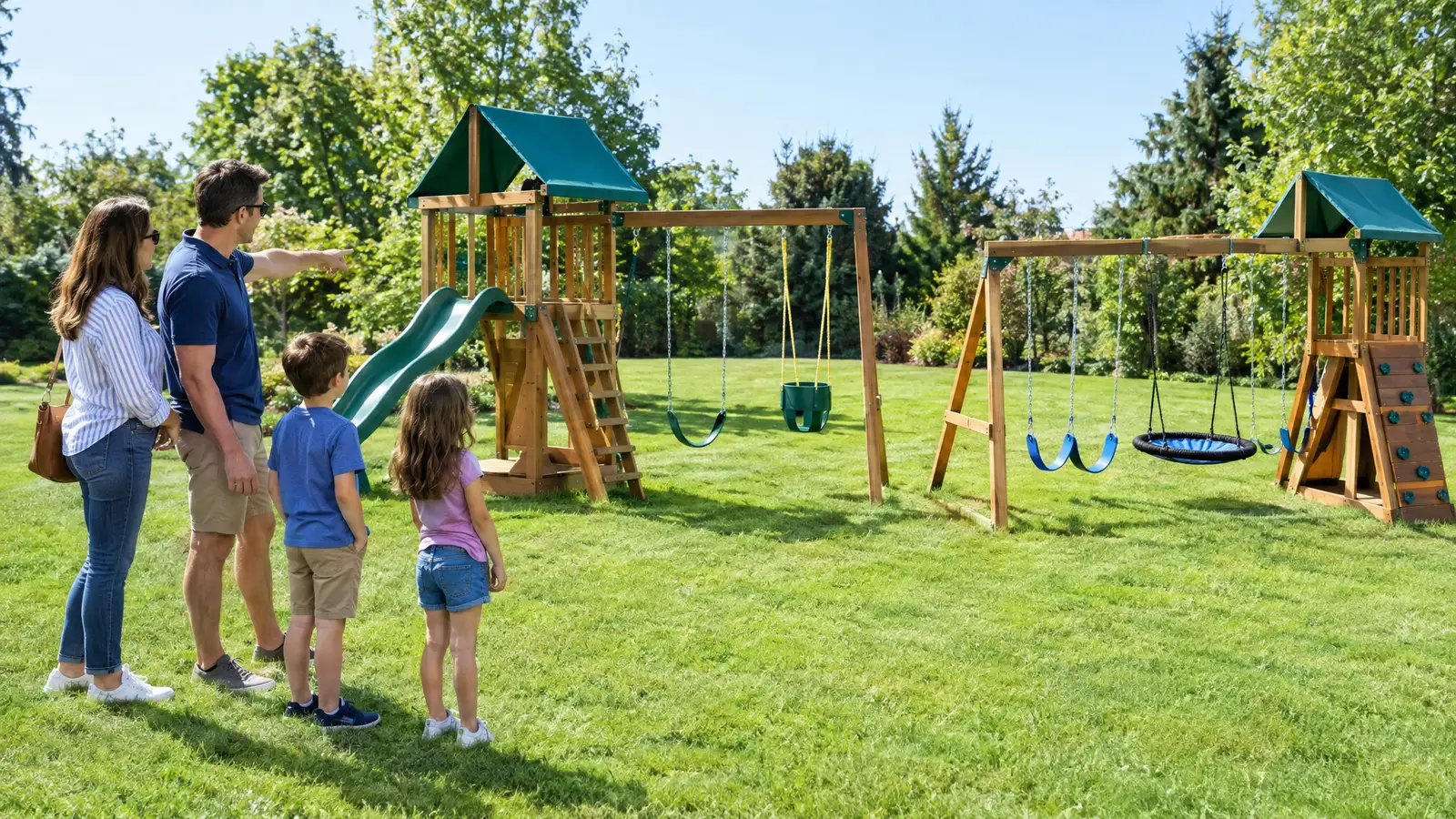
How will you measure and plan my yard? Will I see a layout before building? How will you handle slopes, trees and clearances? Can the design grow later?
A good company asks questions about your kids and your yard before it talks about products.
About materials and hardware
What wood or vinyl will you use and why? What kind of hardware? How is the lumber finished? Which parts wear out and how do I replace them?
Ask to see samples and photos of similar projects.
About installation
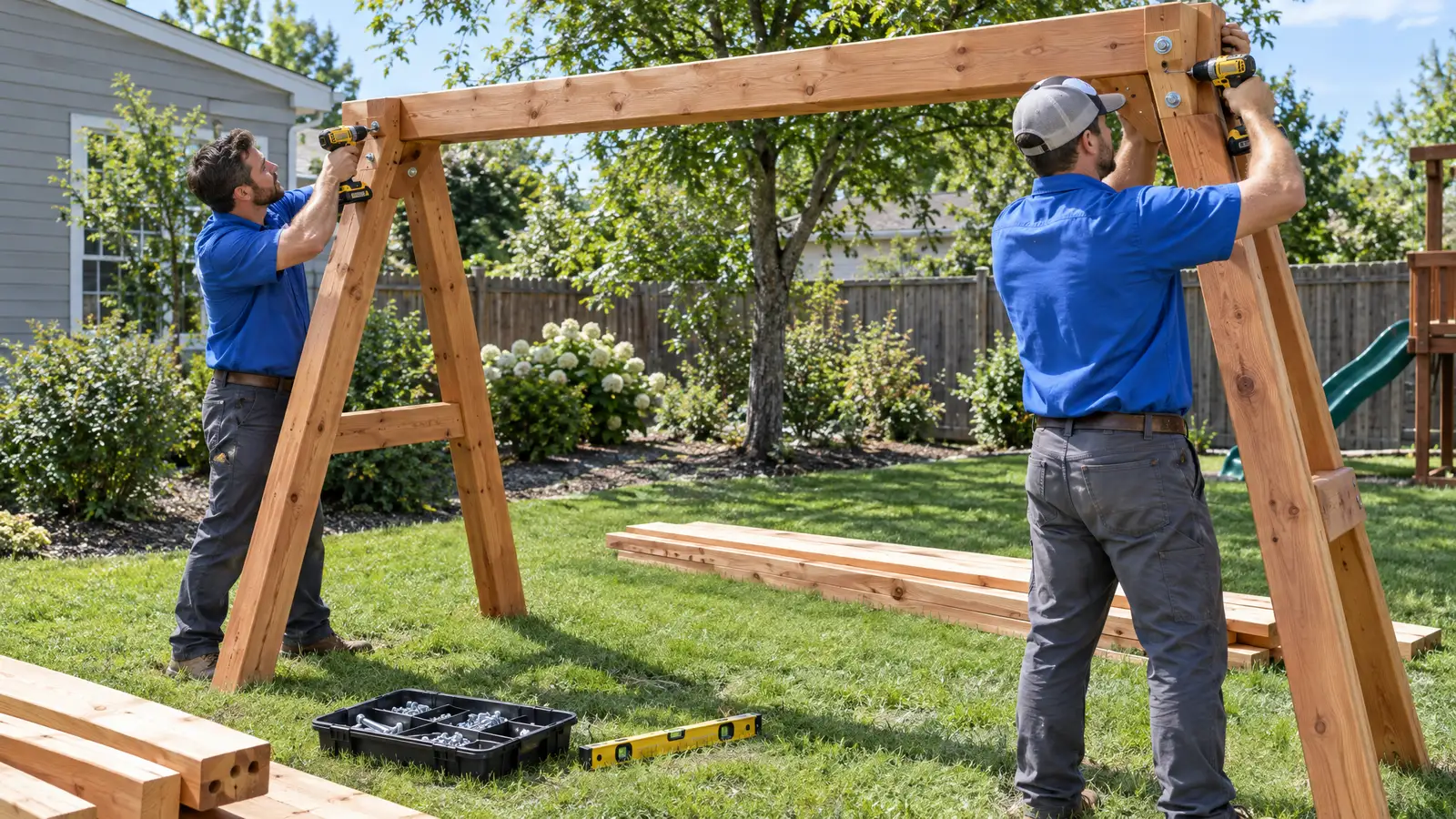
Who will build it and how long will it take? What site work is included? How will you handle anchoring and surfacing? What happens if it rains or something is missing?
Ask what the yard will look like afterward and who cleans up.
About safety and rules
How do you plan the safe zones? What do you recommend for surfacing depth and borders? Do you help with HOA approvals or permits when they are needed?
Ask what guidance they follow and how they handle inspection.
About afterward
What care do you recommend? Do you offer inspections, repairs or parts? How do I reach you if something needs attention?
A company that stands behind its work is happy to answer these questions.
Listen for how they answer
Good companies explain, draw and show. They tell you what they would do and why, and they are comfortable with questions about hardware, anchoring and surfacing. They also tell you honestly when something is not a good idea.
Note whether they ask about your kids and your yard before talking about products. That tells you what the process will feel like.
Ask for the details in writing
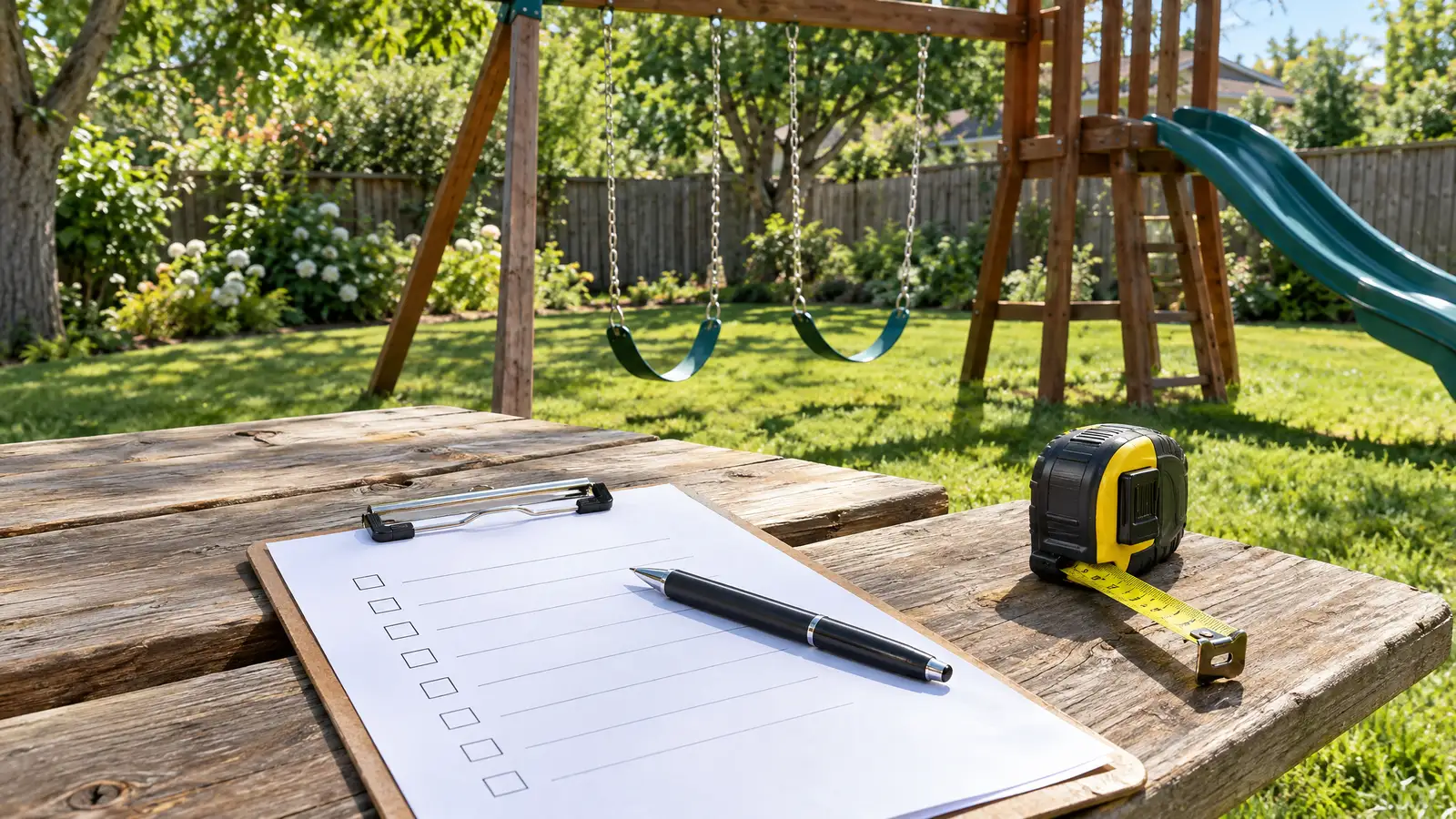
A clear scope lists the size, materials, features, site work, surfacing, installation, cleanup and what is not included. Having it in writing makes comparing companies fair and prevents misunderstandings later.
If something matters to you, such as a stain color or a swing height, put it in the scope.
Quick answers
How many companies should I talk to?
Two or three is usually enough to compare ideas, scope and fit.
What is a red flag?
Vague answers about hardware, anchoring or surfacing, and pressure to decide before the plan is clear.