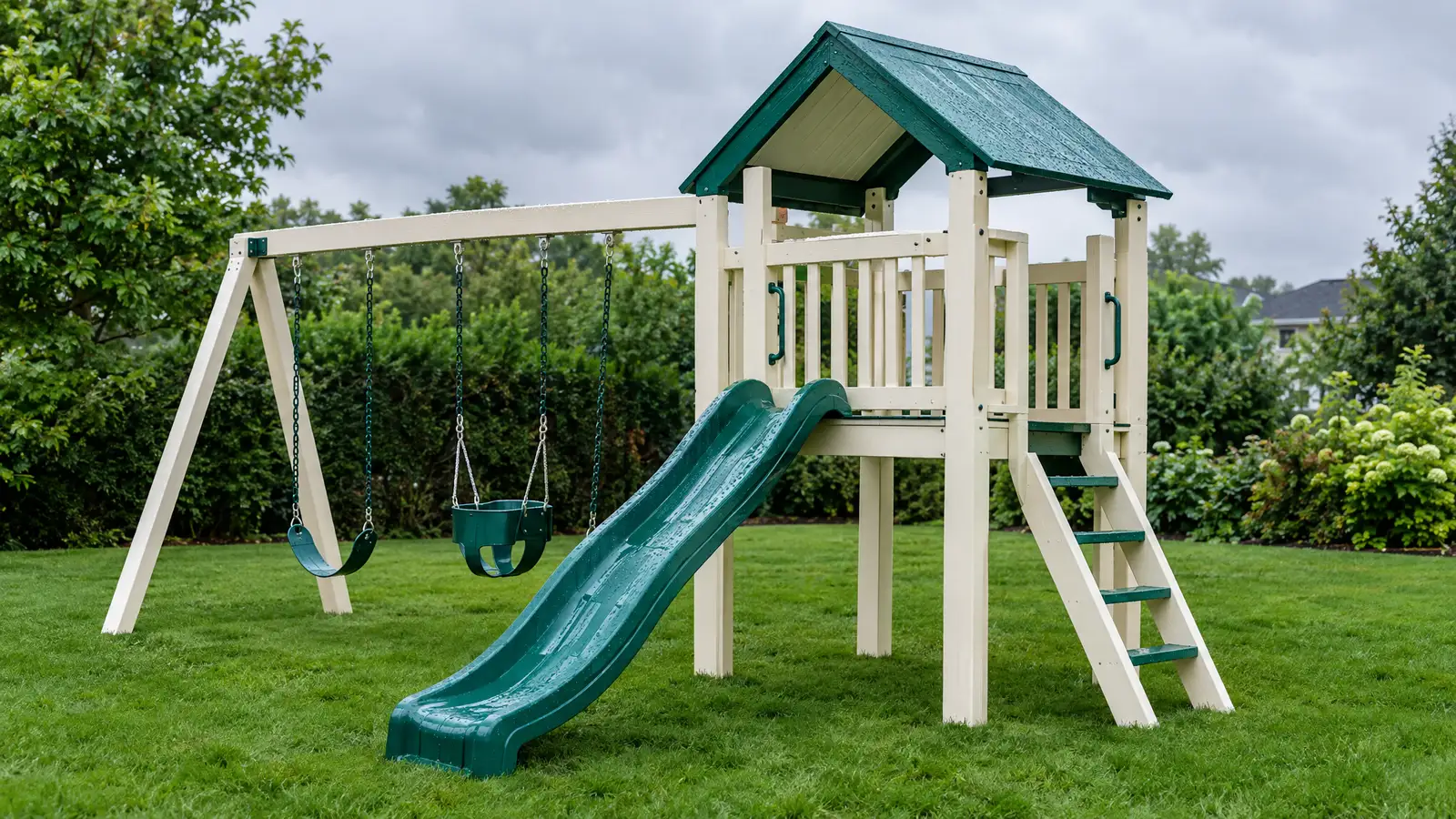
The pros
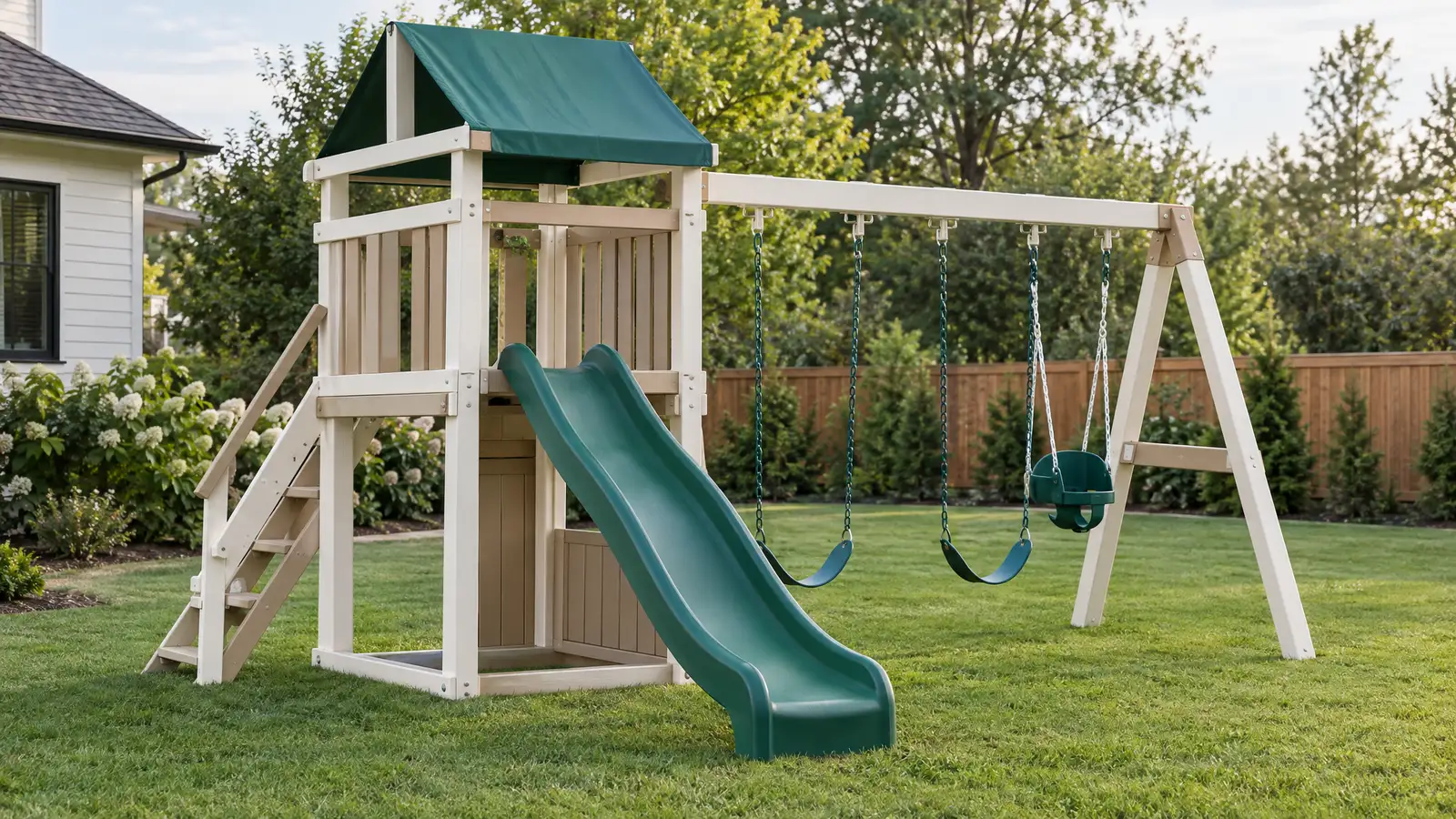
Vinyl does not rot, splinter or need staining. It washes clean with soap and water, stays smooth and looks uniform. It is popular in humid, rainy climates and in neighborhoods with strict appearance rules.
Many vinyl systems are modular with roofs, slides and accessories that snap into place.
The cons
Layouts are less flexible than custom wood builds. Colors are limited. Repairs may need matching parts, and cheap systems can feel less solid than a heavy timber set.
In strong sun, dark vinyl can warm up.
Quality varies
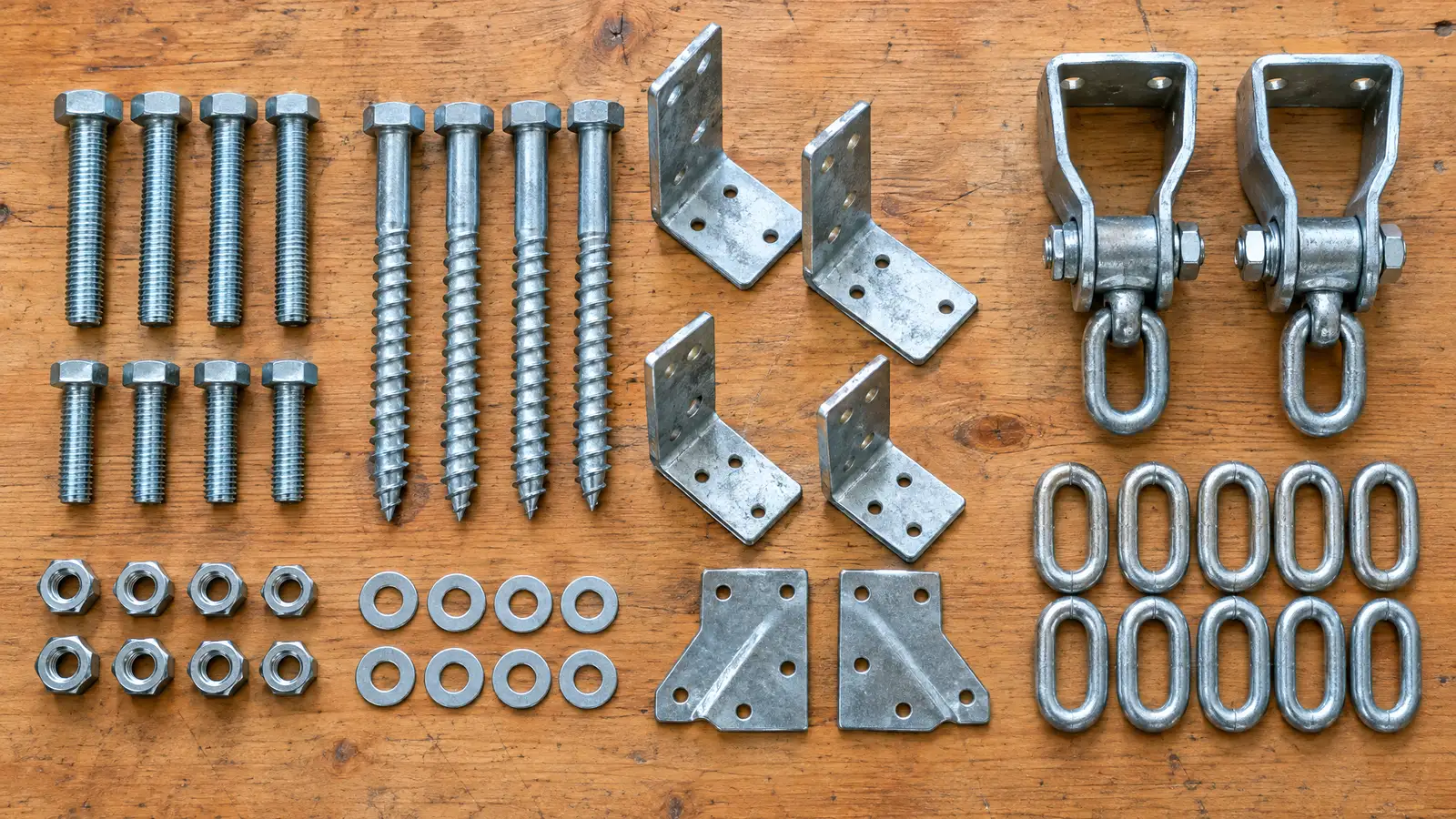
Look at the core structure under the vinyl, the thickness of the sheath, hardware quality and how components connect. A good system is rigid with tight joints.
Ask about replacement parts and compatibility with accessories.
Care
Wash with mild soap and a soft brush, rinse well and check hardware each season. Avoid harsh solvents that can dull the surface.
Cleaning is simple but still worth doing.
Who it suits
Vinyl suits families who want minimal upkeep and a clean look. If you want a one-of-a-kind layout or a natural wood feel, a custom wood set may be better.
We install both and help you choose.
Questions to ask a vinyl seller
What is under the vinyl? How thick is the sheath? Is the color through the material? How are components connected? Which parts can be replaced individually and where do I get them?
A clear answer to each is a good sign.
Combining vinyl and wood
Some families choose a vinyl tower for low maintenance and add wood accessories for warmth, or the reverse. Mixed designs are possible when the connections are designed together.
We can plan a hybrid that suits your yard and your tastes.
Quick answers
Does vinyl get hot?
Dark or glossy vinyl can warm in full sun. Lighter colors and shade help.
Can I add to a vinyl set later?
Often yes, using compatible accessories from the same system.