Accessible versus inclusive
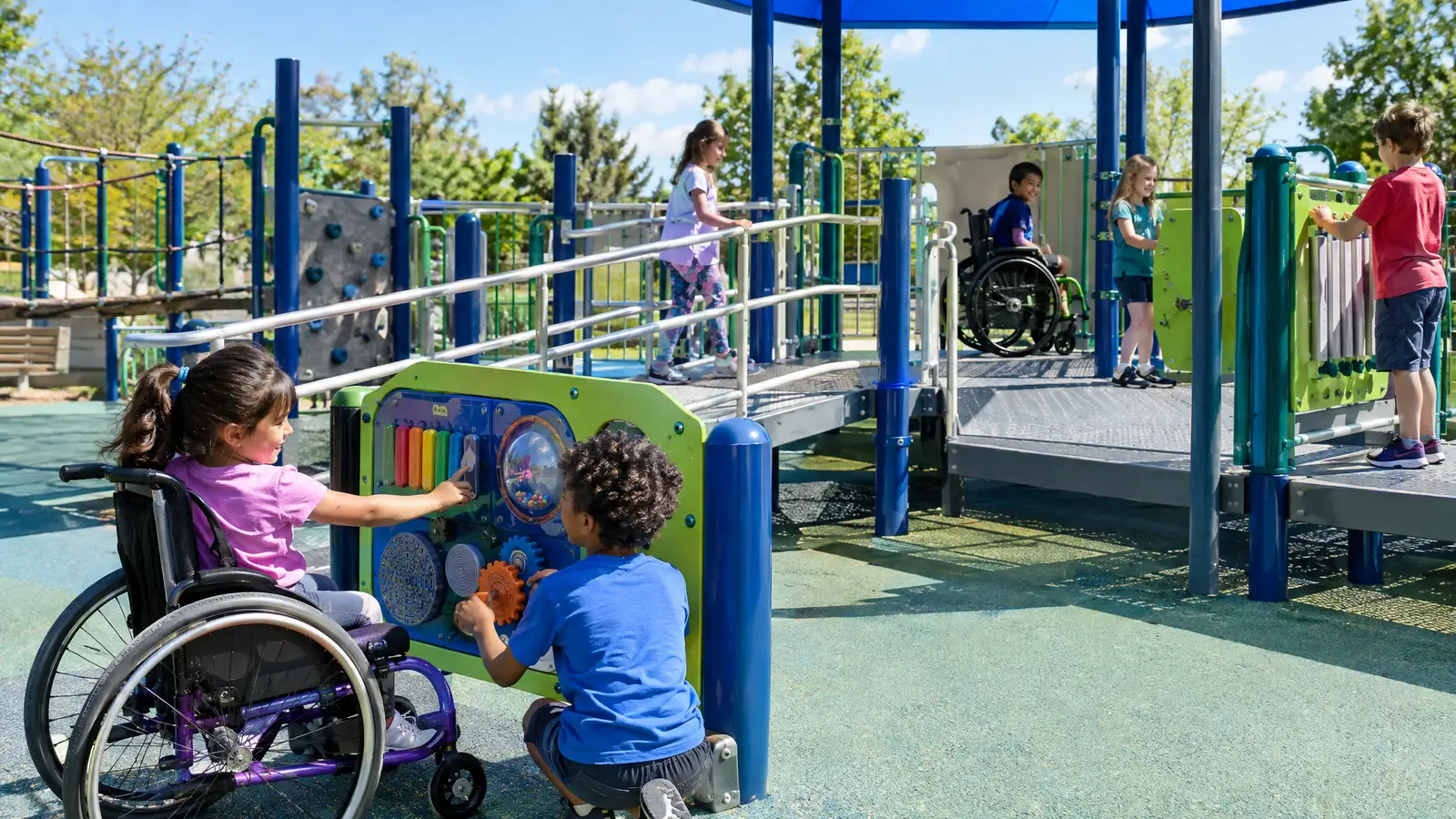
Accessible means a child can reach and use equipment. Inclusive means the space welcomes children of different abilities to play together. Good design aims for both.
Requirements such as the ADA set a minimum.
Routes and surfaces
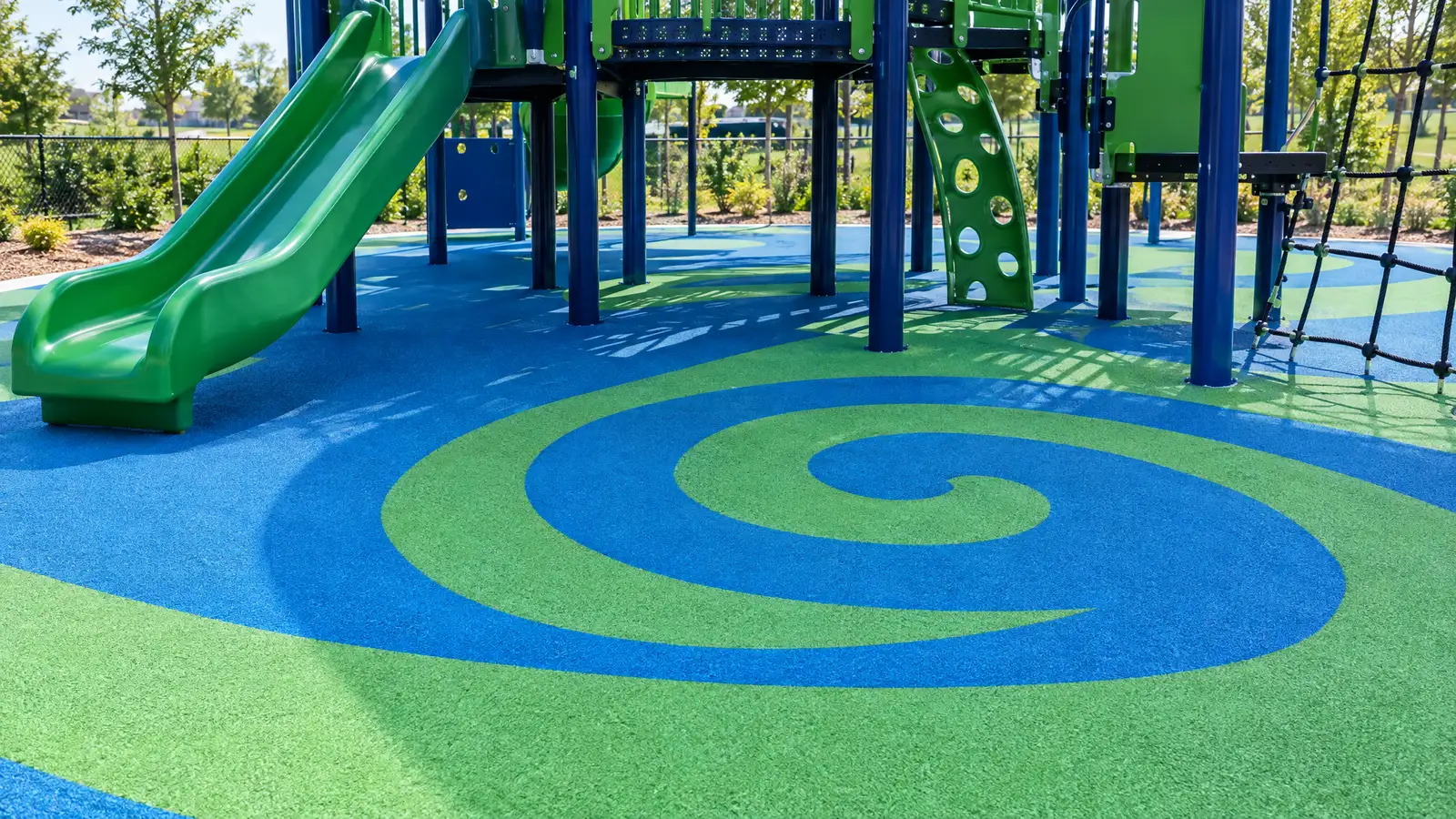
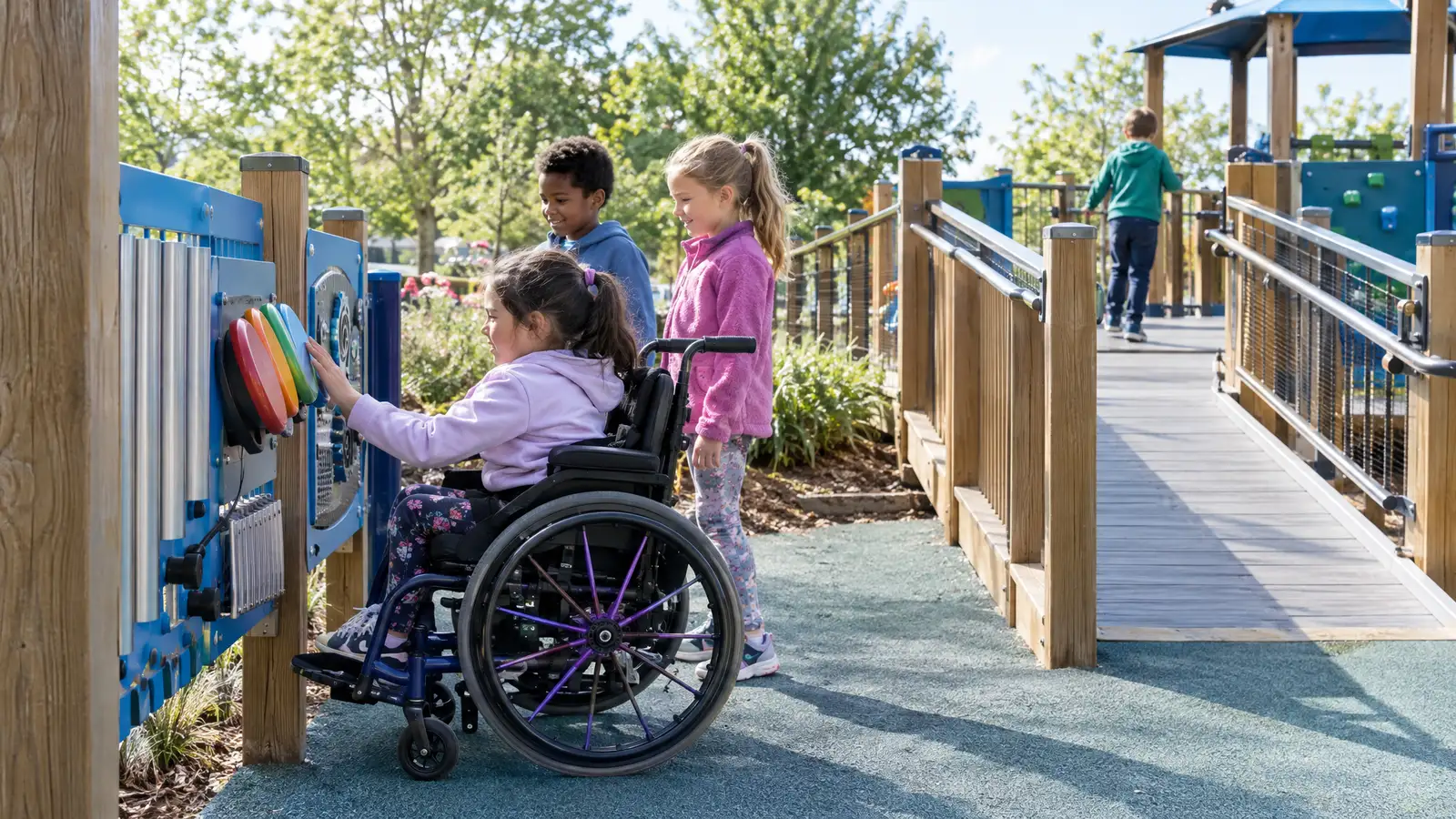
Wide, smooth, firm routes connect parking, seating and play areas. Surfaces such as poured rubber and tiles are firm and stable and work for wheels and walkers. Loose fill is not accessible.
Edges and transitions must be smooth.
Equipment and variety
Offer ground-level play, ramps to raised decks, accessible swings, transfer stations and sensory panels. Include quiet spaces, tactile elements and sound.
Vary challenge so every child finds something that suits them.
Sensory and social design
Music panels, textures, water play and plants engage different senses. Seating at child level and shared spaces encourage friendships.
Consider noise, color and crowds for children who are overwhelmed easily.
Involve the community
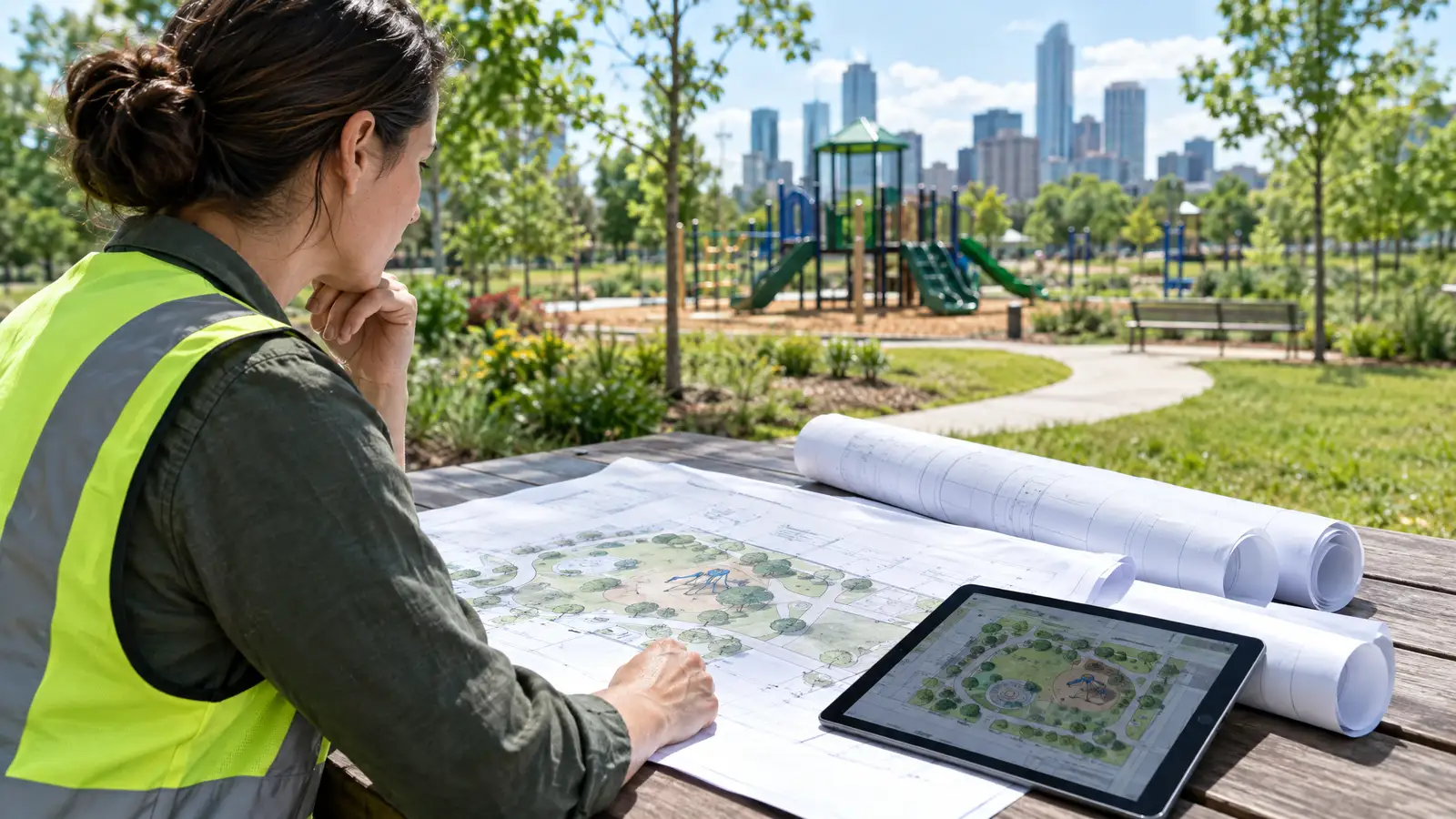
Ask families, therapists and educators what they need. Test ideas and be ready to adapt. An inclusive playground grows from listening.
We can help you plan and phase.
Listen to the community
Families, therapists, teachers and children with disabilities know what makes a playground work for them. Invite them early and take their feedback seriously.
Even small design changes can make a big difference.
Maintain accessibility
Accessible surfaces and routes need ongoing care. Check for gaps, ruts, loose edges and standing water. Keep paths clear of debris and equipment.
Accessibility lasts only if the surface and routes are kept in good condition.
Quick answers
Is poured rubber the only accessible surface?
Poured rubber, tiles and some bonded surfaces are common accessible options. Loose fill generally is not.
Can I retrofit an existing playground?
Often yes, by adding routes, surfaces and ground-level play.