How much slope is too much?
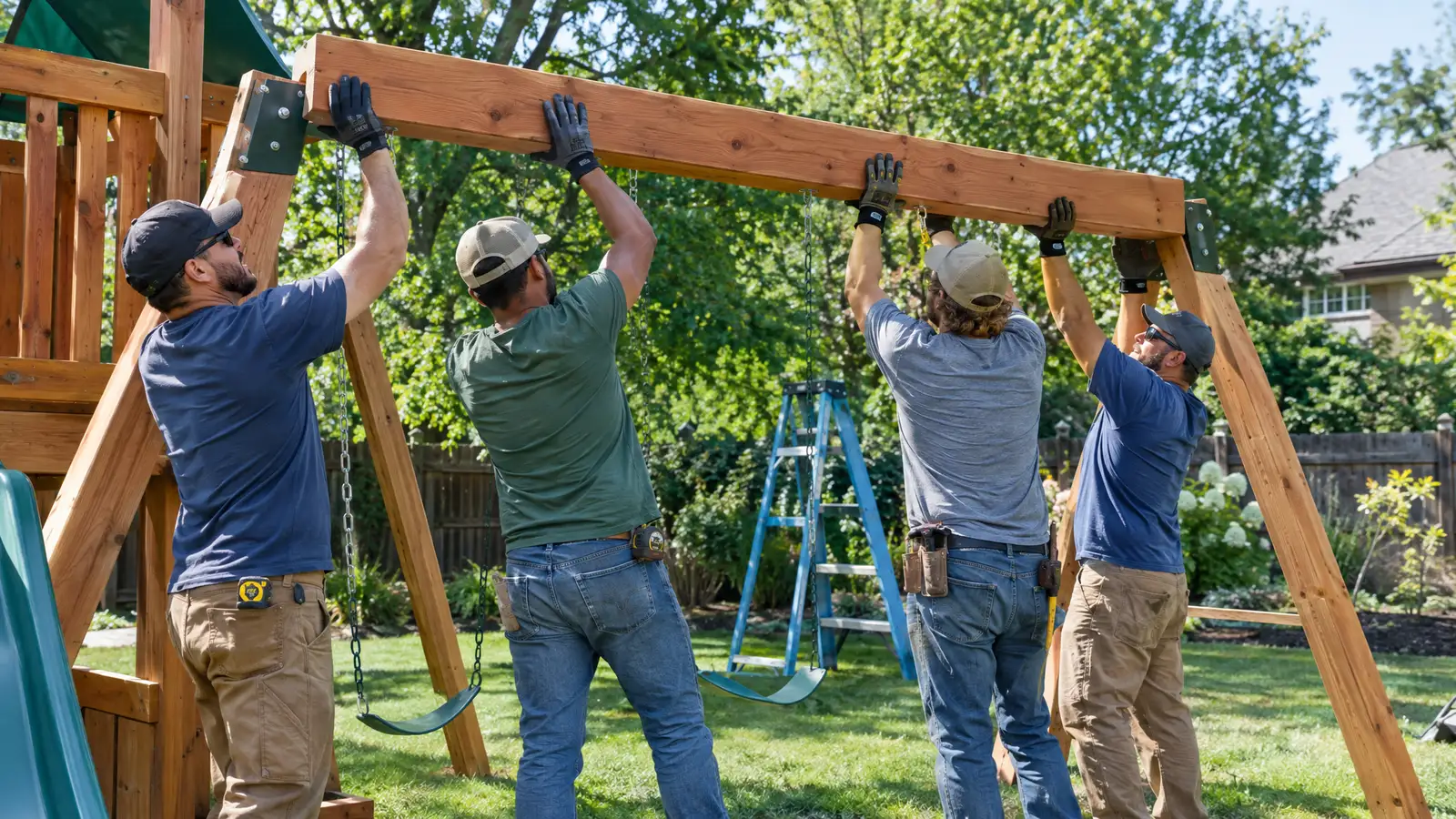
A slight slope can often be handled by adjusting post lengths or leveling a pad. Bigger slopes need more work. A set must stand level and stable, and the use zone should be reasonably flat.
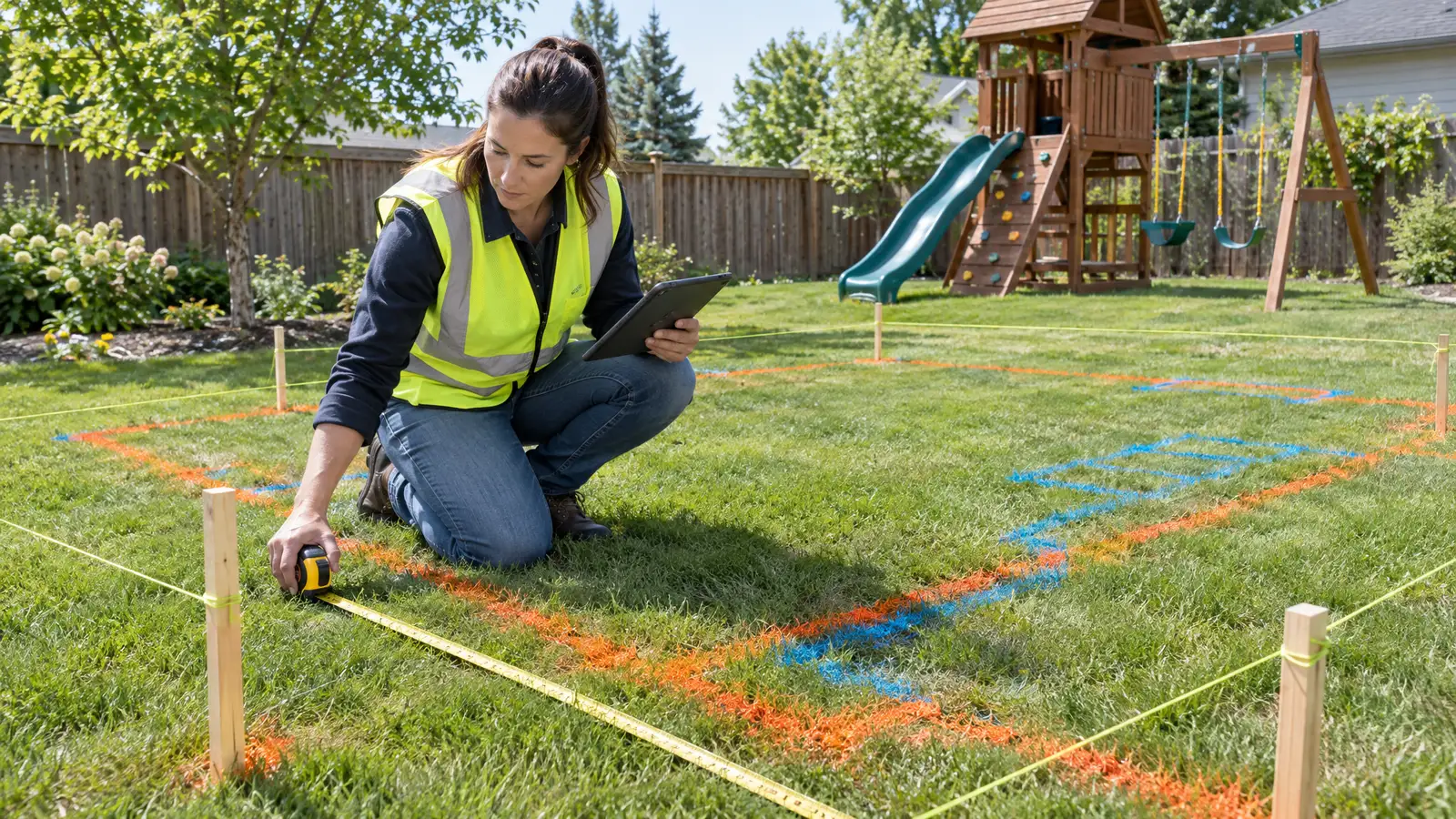
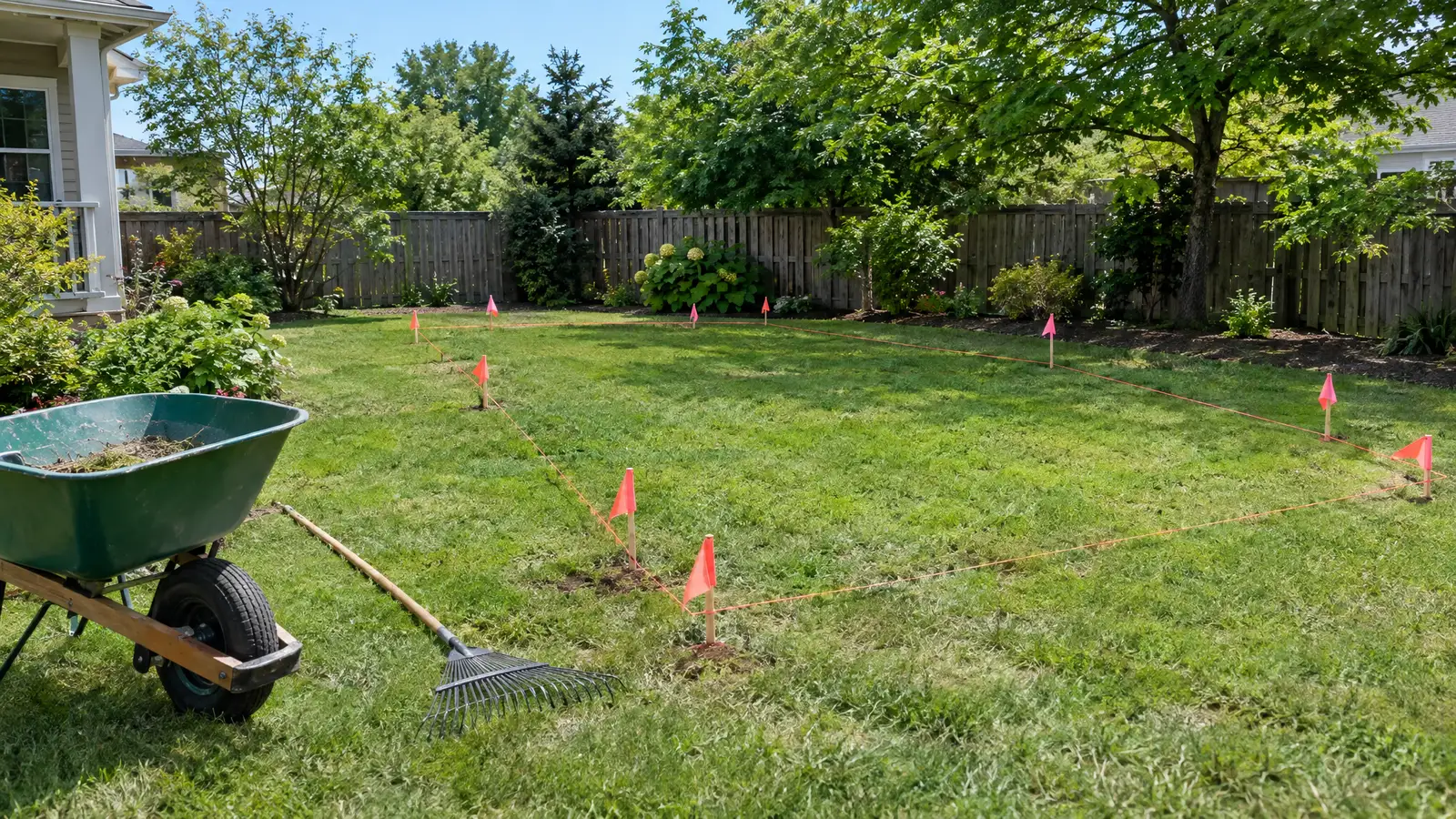
We measure the slope to decide what to do.
Cut and fill
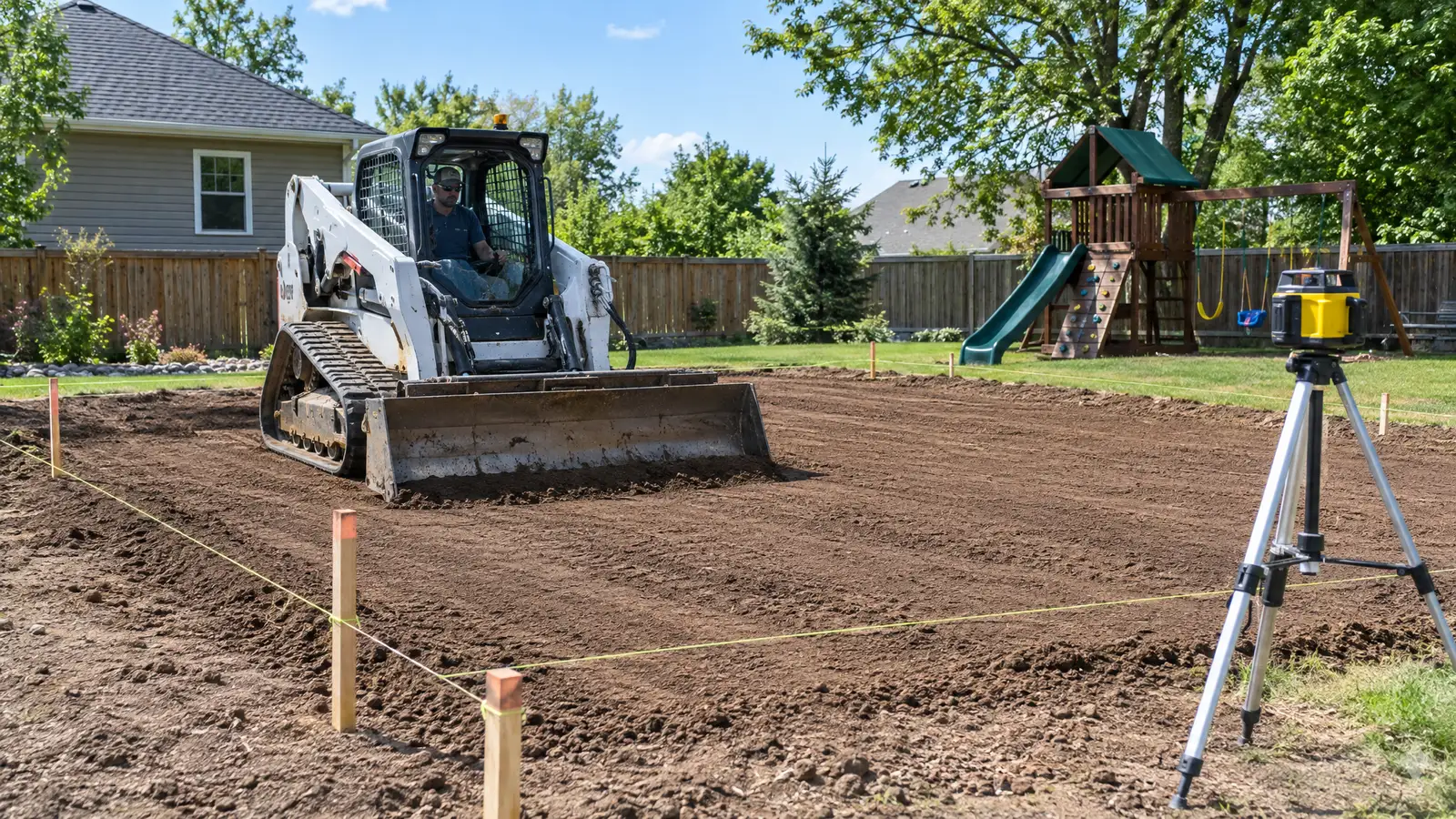
Soil from the high side is moved to the low side to create a level pad. The fill must be compacted so it does not settle. This works well for moderate slopes.
A retaining border holds the pad.
Terraces and retaining walls
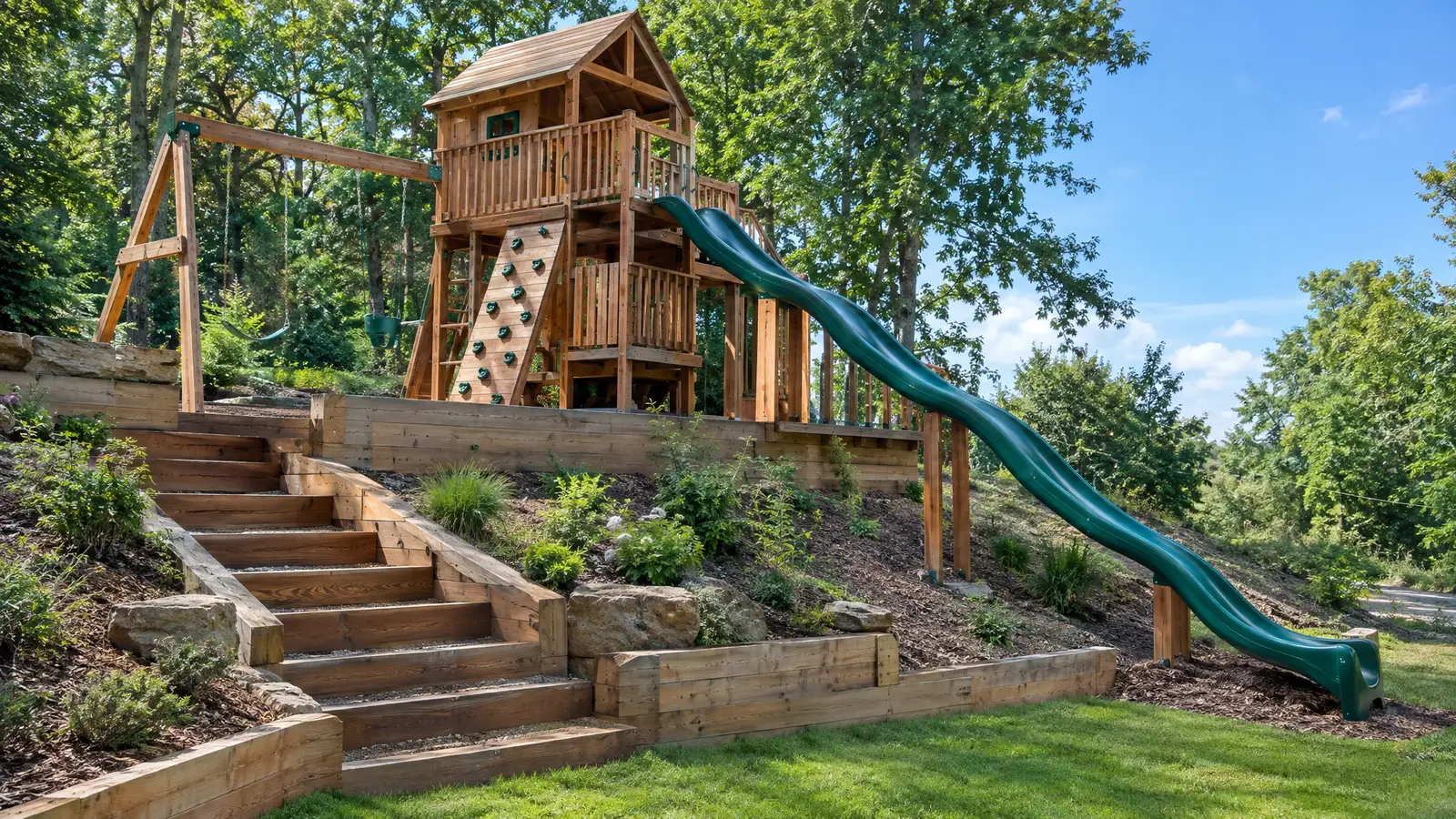
On steeper slopes, a terrace with a timber or stone retaining wall creates a flat area. It can also become a design feature. Walls need drainage and proper construction.
Taller walls may need an engineer or permit.
Stepped and hill designs
A stepped multi-level playset follows the slope, with towers at different heights. A hill slide uses the slope as an advantage. These designs turn a challenge into a feature.
We plan the footing and surfacing for each level.
Drainage matters
Slopes shed water fast and can wash out surfacing. A border and a shallow swale or drain protect the play area. Place the set so runoff goes around it, not through it.
We design drainage into the plan.
Ask about drainage on slopes
A slope sheds water quickly and may channel runoff toward the play area. A small swale, a gravel strip or a French drain can redirect it before it undermines the surface.
We plan drainage along with leveling so the new pad stays dry.
Design with the slope
A hill slide, a stepped deck and a tiered playground turn a slope into a feature. They also reduce the amount of soil to move.
Ask us about designs that work with the grade instead of fighting it.
Quick answers
Can I put a swing set on a slope?
Often yes with leveling or a stepped design. We look at your yard first.
Do I need a retaining wall?
Only for bigger slopes. We tell you honestly if it is needed.